Feeds:
Posts
Comments

Posts Tagged ‘events’

Well, we’re about half-way through the year and I guess it’s time to look ahead to my plans for the rest of the year.

I’ve got a number of revisions under way.

  1. MAGIC AND POWER: I’ve just started the second draft. It’ll take at least one or two more drafts and some beta readers before I decide what I’ll ultimately do with it. It’ll need a new title, at the least. This is the story that grew from a planned novelette into 75,000 words.
  2. BLOOD IS THICKER: This is the sequel to BLOOD WILL TELL. I’ve just completed a revision on this. I’m finally happy with the story. (Did I mention lately that sequels are hard?) It needs at least one more pass. I plan to start serializing it on wattpad as soon as BLOOD WILL TELL is complete there. (Next Sunday, in fact.) And I need to start planning a launch for this for sometime this fall. Note: This time I do actually intend to plan about three months ahead. Guess I’d better get started.
  3. MAGE STORM: I’m just beginning to get feedback from my beta readers on the newly revised version. I’m excited about this one. It’s my middle grade fantasy and I want it to be ready to pitch at WriteOnCon in August. That means I need to rework the query and synopsis, too.

Hopefully about the time I finish these revisions, I’ll be ready to start writing my “weird Oz” story. I’m getting excited about that one, too. It’s likely to be the first novel-length work I’ll attempt in first person. At a minimum, that’ll be an interesting adventure.

Meanwhile, at least until MAGE STORM is ready, I’ll continue querying THE BARD’S GIFT.

Eh, when I put it all down like that, it’s no wonder the house is a mess.

The next-to-last chapter of BLOOD WILL TELL is up now on wattpad. Final chapter to come on Wednesday.

Read Full Post »

ebook week

I’m participating in Read an E-Book Week this week over on Smashwords. Two of my e-books are half-price this week:

Blood Will Tell

Blood Will Tell Cover

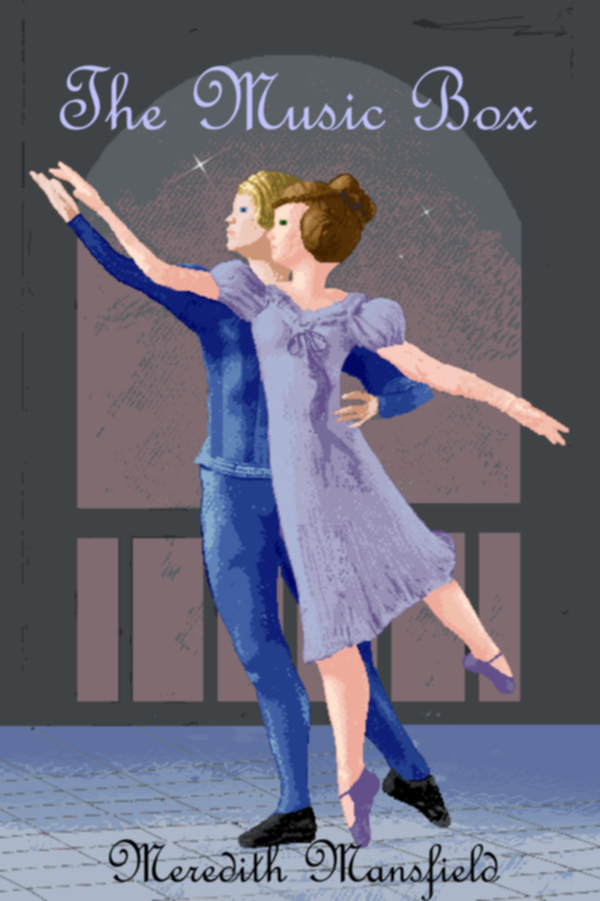
And “The Music Box”

MusicBoxCoverSmall

Are half-off this week, so go check them out.

Otherwise, things that I’ve learned I need to work on, coming mostly out of IndieReCon, are:

  • SEO (Search Engine Optimization).
  • I’m going to be looking into setting up my own mailing list of people who volunteer to learn about upcoming publications. There are a couple of details I need to take care of before I can proceed with this.
  • Audio books. I need to stop pretending I’m going to be able to record them myself. I don’t have the equipment, time, or a trained voice that will stand up to the strain. I might still manage one of the short stories. Otherwise, I need to start exploring some of the other options available.
  • I’m also going to explore serializing over on Wattpad to introduce more readers to my writing. What I still have to decide here is whether to start with BLOOD IS THICKER or go back and start with BLOOD WILL TELL. (BLOOD IS THICKER is the sequel to BLOOD WILL TELL.)

So, look forward to more posts as I explore these areas.

Read Full Post »

TheWorldBuildingBlogfest 

Day 2 of the World Building Blog Fest hosted by Sharon Bayliss is about history. Here’s the history behind what happens in THE BARD’S GIFT:

The High Middle Ages coincided with a climatic period called the Medieval Warm Period. The North Atlantic region was warmer then than it is now. For example, winters were mild enough to grow wine grapes in England.

This is the age of the Vikings, a period of expansion throughout Europe, but especially in the North. The Norse raided throughout Europe and into the Mediterranean. They created Norse settlements almost everywhere they went. At this time, they also discovered and settled Iceland.

Iceland technically owed allegiance to Norway, but they were far enough away to have considerable independence for the first couple of hundred years of the settlement. There was no hereditary nobility in Iceland. The Icelanders developed their own form of government, based on regional chieftains and an annual gathering called the Althing, where they would hash out any disputes or changes in the laws.

Soon after the discovery of Iceland, a ship got blown off course and discovered Greenland. Some time later, Erik the Red, a man with apparent anger-management issues, was sentenced to lesser outlawry–three years of exile–for killing another Icelander in a dispute. Erik spent his exile in Greenland. When the period of banishment was over, he returned to Iceland and gathered settlers to return to Greenland. Even during the relatively temperate Medieval Warm Period, the passage was risky. Twenty-five ships left Iceland for Greenland and only fourteen arrived.

Greenland at the time really would have been green, at least along the fjords, with plenty of grass for the Vikings’ livestock. There would even have been stands of birch trees in the most sheltered parts of the fjords, which the settlers used to build their longhouses. Archaeology tells us that the original settlers’ diet came 80% from the land and only 20% from the sea, despite plentiful schools of cod just off Greenland. Nevertheless, the Greenland settlement was never completely independent. The Greenlanders were always partly dependent on trade with Iceland and through Iceland with Europe.

The Greenland settlement was also never very large. There were about 600 farms in three enclaves–the largest East Settlement (500 farms), the West Settlement (95 farms), and a small scattering of farms in the Middle Settlement (20 farms), which is sometimes considered part of the West Settlement. (This story begins in the Middle Settlement.) At its height, there may have been between 4,000 and 10,000 Greenlanders.

In 985, shortly after Greenland was settled, another ship was blown off course and discovered that there was still more land farther to the west–North America. Fifteen years later, Erik’s son Leif the Lucky led an expedition to explore this new land. They named three separate areas.

Helluland, meaning “land of flat stones”, is almost certainly in northern Canada, possibly Baffin Island.

Markland, meaning forested land, is probably the area around the Saint Lawrence River. This would have been a very important discovery to the Greenlanders. Iceland’s forests had all been harvested and so had much of Greenland’s. Wood was needed for building ships and longhouses, as well as for cooking and heating.

The location of Vinland is unclear, although it is certainly farther south. Vinland may be named for wild grapes (or other native berries such as gooseberries that the Norse mistook for grapes) or it may refer to pastureland. Since the Norse lived largely off their flocks of sheep and herds of cattle, this would also have been an important discovery for the Greenlanders.

There was certainly a Viking habitation at L’Anse aux Meadows. It was probably a gateway camp used as a place to make repairs, and possibly over winter on voyages to Markland or Vinland, but not a permanent settlement.

The Greenlanders made several attempts to establish a colony in Vinland, but failed for several reasons. The main one appears to be that they just couldn’t keep from getting into fights with the local Native Americans, who were far more numerous. Ultimately, the Greenland settlement, which was itself a fairly recent colony, just wasn’t large enough or rich enough to sustain another colony at that distance in a hostile environment.

However, the Greenlanders did continue to make regular voyages to Markland to harvest timber until at least 1347, within 150 years of Columbus’s voyage to “discover” the New World. The Vikings’ usual method of navigation was to sail to a known location at the same latitude as their destination, then sail directly west or east. The passage from Greenland to Helluland and beyond, however, could also be made by following the Greenland current north along the Greenland coast to the Nares Strait, which separates Greenland and Ellesmere Island by only about 15 miles at its narrowest. From Ellesmere Island, nearly constant northerly winds and the south-flowing Labrador Current could carry them to Helluland and then on to L’Anse aux Meadows. This is the route detailed in Erik the Red’s Saga.

Graphical description of the different sailing...

Graphical description of the different sailing routes to Greenland, Vinland (Newfoundland), Helluland (Baffin Island) and Markland (Labrador) travelled by different characters in the Icelandic Sagas, mainly Saga of Eric the Red and Saga of the Greenlanders. Modern English versions of the Norse names. (Photo credit: Wikipedia)

In the 14th century, the climate began to shift toward the cold period known as the Little Ice Age. The weather became much colder. There were more frequent and fiercer storms. This was a one-two punch to the Greenland settlements. It was harder to survive by the Viking way of life in Greenland. By the end of the settlement, archaeology tells us that the settlers’ diets came 80% from the sea and only 20% from the land, the reverse of what it had been at the beginning of the colony. The storms and the increase in sea ice also made travel between Greenland and Iceland more hazardous. There were years in which no trade ship made it back to Greenland.

History tells us that the Greenlanders starved to death, probably in the 15th century. But there are at least three other things that they could have chosen to do.

The last written records of the Norse Greenlan...

The last written records of the Norse Greenlanders are from a 1408 marriage in the church of Hvalsey – today the best-preserved of the Norse ruins. (Photo credit: Wikipedia)

They could have tried to sail back to Iceland. Political changes in Iceland would have made this undesirable for them, especially after the settlers’ families had been living in Greenland for 400 years or more. As in the story, that voyage had become hazardous.

They could have learned the techniques of the Inuit who were also living in Greenland at that time. The Inuit survived the Little Ice Age in Greenland, but the Vikings had contempt for them and seem to have been much too determined to stick to a way of life that wasn’t well suited to Greenland.

Or they could have tried again to colonize North America. There is some disputed evidence that Vikings might have made it into the heart of North America. To do this, they would essentially have had to sail to that part of the map that medieval mapmakers would have labeled “Here be Dragons”. That, of course, is how this story started.

Read Full Post »

Well, I only have a couple more days of indecision. On Friday, the next phase of Gearing Up to Get an Agent starts up. Time to try to get my query in for the Pitch Polish part of the event. And I have to decide which story to send in.

I’m currently querying FIRE AND EARTH, a young adult fantasy.

When her country is invaded, seventeen-year-old Casora loses her battle against the berserker curse she was born with. The curse turns her into an unstoppable warrior, but that’s no use to her family when she must be exiled for the ferocious temper that goes along with it. She turns mercenary while searching for a way to tame the berserker. Hope comes in an unexpected form when she’s sent to rescue the scholarly Prince Tiaran.

The rescue leaves them stranded on the wrong side of the city walls by the besieging army. Now they–and Casora’s mercenary band–are the only ones in a position to stop the invaders. Casora teaches Tiaran how to fight. His special knowledge of the enemy allows them to devise a plan that just might work.

Even with Tiaran’s plan, the odds will be against them, but the situation becomes still more complicated for Casora. Now it’s more personal than defeating the enemy or freeing her people. Tiaran is the only one who’s ever called her curse a blessing or been able to calm her berserker rage. If she has a prayer of finding the serenity to conquer her curse, Casora must decide if she can believe that there’s any future for a battle-scarred warrior and a prince.

But I’m also making some revisions to MAGE STORM, a middle grade fantasy, and getting ready to start querying that one again.

Rell doesn’t want magic. He doesn’t dream of being a hero or a mage out of old legends. Certainly not a mage, after they all incinerated each other at the end of the Great Mage War. He’d just like not to be in his big brother’s shadow for a change. Someone should have reminded Rell to be careful what he wished for.

Mage storms, composed of the ashes of the wizards killed in the War, are the scourge of his world. The embers that fall like rain burn and destroy everything they touch. When he’s caught out in one, Rell is struck by a strange blue cinder that infects him with magic. That’s when the real trouble starts.

His father expects Rell to bring back the useful magic Da remembers from before the war. Rell wants to make his father proud, but his magic responds more to his emotions than his will. He can’t figure out how to make it do what he wants and the frustration only brings out one of its most dangerous aspects: fire.

Blowing apart the cave his family uses to shelter from the mage storms makes it clear that he’s never going to figure this out by himself. The next thing that blows up may be Rell himself, if he can’t find a better way to learn than trial and error. Turns out he’s not the only one–and not every solution to their problem is what it appears to be.

So what do you think? These aren’t posted for critiques at this time. That’s next week.

On another front. I think I’m within sight of typing the end on the first draft of my YA alternate history, THE BARD’S GIFT. Realistically, that one won’t be ready to start querying probably until next summer. But it’ll still feel good to type THE END again. It always does.

Read Full Post »

This is a day early, but, well, Sundays and Wednesdays are my usual posting schedule and this way it’ll be up earlier than it would be if I waited until tomorrow to post it.

Mini bio:

Professionally, I’ve been a financial analyst and a visual basic programmer. I also have a paralegal certificate, although I’ve never worked in that field. It’s anybody’s guess what I’ll be when I grow up.

Imagining stories and writing have always been an important part of my life. It’s one I’ve finally gotten to spend a significant amount of time on while I care for my mother who has Alzheimer’s disease.

Questions:

  • Where do you write?

Currently, at my desk in one corner of my bedroom. I have plans eventually to set up a real office space, but can’t do it just yet.

  • Quick. Go to your writing space, sit down and look to your left. What is the first thing you see?

Hah! I cleaned off my desk and actually dusted and polished it last week or the answer to this question would have been different. Right now, there’s a pewter unicorn figurine in that spot.


  • Favorite time to write?

Hmm. I write on and off all day, but my most productive time is probably late afternoon or early evening.

  • Drink of choice while writing?

Usually water or tea in the morning.

  • When writing, do you listen to music or do you need complete silence?

Complete silence? Where do you find that? And would you want it if you could find it? I think complete silence is a little bit creepy. Usually, I have the tv on as a kind of general background noise. Sometimes, I’ll play instrumental music while doing revisions.

  • What was your inspiration for your latest manuscript and where did you find it?

Ah, long story. Let’s see. About two and a half years ago, there was a trigger challenge on Hatrack River Writers Workshop. The trigger was “slave to the flame”. I wrote a fable about a little dragon who outmaneuvered his larger tormentors by learning to breathe fire, but then I didn’t quite know what to do with the fable. (It had an unhappy ending by the way, partly because I couldn’t do anything else in the space allowed for the challenge. Everybody hated that ending. And a lot of readers didn’t really like the fable quality, either.) So, I wrote a framing story about a girl who had the gift of telling the right story for any occasion. I submitted that to a few places without any success. Some readers thought it felt like the beginning of something (a common complaint about my short stories) and I had some ideas about what else might happen to that girl and how she came to be in that position in the first place. So, now I’m writing a young adult alternate history. That original story will be near the end, though. Not the beginning.

Interestingly, to me at least, the manuscript I’m about to revise (a middle grade fantasy) also grew out of a trigger challenge on Hatrack River. The trigger for that one was “Cinders of the Great War”. Maybe I should do more of the challenges.  

  • What’s your most valuable writing tip?

Never give up. Never surrender. There’s going to be plenty of rejection and disappointment along this road. You’ve got to believe in your own writing and your own stories, even when nobody else does. Perseverance is the only way to succeed.

Oh, and find a great critique group. (I have two.)

Read Full Post »

Something new I learned in the very last event of WriteOnCon this year. Apparently there’s a gap between the middle grade (8 to 12) age group and the young adult (14 to 18) age group. Nobody wants books about twelve- to fourteen-year-olds.

The reason given? Bookstores don’t know where to shelve such books. The main characters are too old for middle grade readers and too young for young adult readers. It seems like a pretty thin reason to ignore an entire group of readers. Makes me think that online bookstores, like Amazon, are a very good idea. It’s no big deal to create a new category in the database and nobody has to move bookshelves or books.

Plus, of course, that skips over the difficult period called puberty, which strikes me as just cowardly. Admittedly, it’s been a few years, but there are parts of that time that are indelibly etched on your memory. Not only is it a time just rife with conflicts, which we all know make good stories, it’s also a time when reading about others going through some of the same embarrassing, confusing things might be more than usually beneficial. But, there’s no space on the shelves for it.

It also makes me wonder about something else. The standard wisdom that you’ll see quoted around the internet by industry professionals is that girls graduate from middle grade to young adult, while boys, if they keep reading, graduate straight to the adult section. I have to wonder if at least a part of the reason for this is that the romance element of just about all young adult stories satisfies at least a part of the needs of pubescent girls. On the other hand, the young adult stories in which the boy is almost always older, hot, and at least socially adept enough to ask a girl out without blushing maybe just don’t address the needs of pubescent boys, so they turn elsewhere.

Part of me wants to say that this is an under-served audience just waiting for the right books. On the other hand, I can wonder and even rant about this as much as I want, but one fact remains: getting started in this business is an uphill battle as it is. Making it any steeper than it has to be is akin to banging your head against the wall because it feels so good when you stop. An established author with a great track record might be able to write these books successfully. A debut author–or a writer hoping to be a debut author–just hasn’t got the horsepower to get up that hill.

Rats! And I’d started MAGIC’S FOOL with the MC at age thirteen. I’m shelving that one and the sequel, MAGIC’S APPRENTICE, while I decide what to do. Make the MC younger? That complicates the plot of MAGIC’S APPRENTICE enormously. Make him older and take this story to the younger side of young adult? It’s ironic that he was fifteen in the original version of this story. In that case, I’m going to have to weave in a subplot or two or else change the central conflict to expand the story–a rewrite, either way. Otherwise, at less than 50,000 words it’s just too short for a young adult novel. Hmm. I already have at least one idea for a subplot, though.

It’s not all bad, though. I got a couple of really good ideas on how to improve MAGE STORM and make it even better before I start sending it out again. That will probably be my next project after I finish the first draft of THE BARD’S GIFT.

Read Full Post »

We all know that the internet is a great research tool. We all use it to research agents, too.  But there are a lot of other resources out there for writers, too.

  1. Writers’ forums and critique groups. This is a great way to network and share with other writers and improve your own writing. I learn at least as much from critiquing another writer’s work as I do by having my own critiqued. Even if you are lucky enough to have an in-person writers group, you can still benefit from an online group, too. It opens up the possibility of so many more writers and a better chance of finding a group specific to your genre. It’s not that you can’t learn anything from a mystery writer’s critique of your YA fantasy. But there’s nothing like having people actually familiar with the genre comment on your work.
  2. Blogs. There are literally thousands of industry blogs out there by authors (published and unpublished), agents, editors. It’s a great way to learn more about the industry we’re all trying to break into. Sometimes, there are fun contests, too.
  3. Online events like the recent WriteOnCon. Let’s face it, what could be better than a writers’ conference you can attend in your pajamas. And if you missed WriteOnCon last week, don’t worry. It’s all archived on the site–vlogs, blogs, forum events, and live chats. Ok, so maybe you can’t participate in the live events, now. But you can still see what all the awesome participants had to say.
  4. Our own blogs. We blather on about our WIP and whatever else pops into our heads hoping to connect with other writers and maybe even, someday, a reader or two.
  5. Third Writers’ Platform-Building Campaign. And in furtherence of that, there’s this awesome campaign being run by a fellow writer. I’m joining.

Read Full Post »

If you write young adult or middle grade stories, what are you doing reaind my blog today? Get over to WriteOnCon. It’s free and you don’t have to travel–both of which make it right up my alley right now.

I didn’t even know about it until Monday.  But don’t worry about what you may have missed. It’s still there and, while you might not be able to participate live, you can still read it.

Go.

Read Full Post »

So, I spent all day yesterday at the Agents Day put on by the Orange County chapter of the Society of Chilren’s Book Writers and Illustrators (SCBWI). It was a fascinating, informative, exciting, and exhausting day.

Five different agents spoke to a group of ninety writers.

  1. Natalie M. Fischer of Bradford Literary Agency talked about how to successfully re-envision and revise. The text of her talk should be available on her blog: www.adventuresinagentland.blogspot.com. She had several interesting and useful suggestions, so I recommend taking a look.
  2. Rosemary Stimola of Stimola Literary Studio talked about the importance of finding the right agent and creating a career-long relationship.
  3. Edward Necarsulmer of McIntosh and Otis talked about the various kinds of things agents do during a day to help their clients.
  4. Anna Webman of Curtis Brown, Ltd. talked about the kinds of things authors can do to help generate their own publicity and help sell their books.
  5. Stephanie von Borstel of Full Circle Literary talked about her agency’s approach and brought one of the authors she represents, Rene Colato Lainez to talk about the author’s experience of working with an agent.

A lot of learning about the business crammed into one day and I’m not sure I’ve completely processed all of it, yet.

After the presentations, we broke into five smaller groups. The agents rotated among those groups for about fifteen minutes each so that we could have a chance to talk to them and ask questions.

Most exciting, MAGE STORM attracted the interest of the agent who read the first chapter for a critique. Now I have some revising to do, based on her suggestions, and send it on.

If you get a chance at one of these types of events, I would definitely recommend it.

Read Full Post »

« Newer Posts