Feeds:
Posts
Comments

Archive for the ‘writing’ Category

In those moments when I need to take a short break from my YA alternate history, THE BARD’S GIFT, I’ve started reading through another one of my projects, MAGE STORM.

MAGE STORM is a middle grade fantasy. It’s also a boy adventure story, something that I see several agents/editors saying that they want. I queried it last year to some interest but no offers. Now, I’ve given it a couple of months to cool off and I’m taking a fresh look at it. I’ve already identified one place where I think I could do a bit better and I’m halfway through a new scene to do that.

But, one of the things I’m considering is whether or not to rewrite the whole thing in first-person. It’s currently close limited third person. Everything in the story is filtered through the main characters perceptions already.

Still, changing it to first person would be a rewrite. Done right, in my opinion, it can’t just be changing the pronouns and the conjugations of the verbs. It’s a lot more involved than that–or it should be. First person point of view invites the reader to live inside that character’s skin. It’s a lot more intimate than even close limited third person.

I’ve written first person before, but only in a couple of novelettes. (Shameles plug: “Heart of Oak”, which is currently free on Smashwords and all the places Smashwords distributed it to, is one of those.) In both cases, it was because I “heard” the story in my own head that way. I’ve never written first person just because it’s the popular thing right now.

Just a quick survey of recent novels in both young adult and middle grade makes it impossible to deny that first person is strongly in favor right now. Is that reason to rewrite this in first person? I haven’t decided yet. After all, I really do want to see this published.

So far, I still “hear” this story in third person, although I could easily see it done in first person. Nearly all of the character’s emotions are already there, and quite a few of his thoughts. While there are a number of action/fight scenes in which, eventually, he comes out as the hero, he’s nearly always frightened enough during the action that he wouldn’t come off as bragging. That can be one of the downfalls of first person.

Another consideration, though, is that this story can be the first in a series. I already know, in a general way, what the next two books in this series would be about. I think I need to consider whether first person would also serve those stories as well as third person.

So, for this pass, I’m just going to concentrate on the sorts of things I’m working on now. When I get through this read-through/revision, I’ll make a decision on whether to make the change or not.

Now, I’m going to get back to work on that improved scene.

Read Full Post »

I find that my current work in process, THE BARD’S GIFT is going more slowly than is usual for me in a first draft. Sometimes, I find this frustrating. Then I remember the difference between my other stories and THE BARD’S GIFT: it’s not a straight fantasy in which I can make many of the details up to suit myself. It’s an alternate history.

That means that periodically, I have to stop what I’m doing to research something. Oh, I did plenty of research before I ever started the story. In fact, the trick with the initial research is not to put all of it into the story, like writing a term paper.

But it’s amazing how many little details you don’t realize you need until you get there. Some of them, I can just mark and go on to fill in the details later. Others are more critical to the flow of a scene or chapter and have to be addressed before I can go on.

At this point, I’m having to go back to the Vinland Sagas themselves to find some of the answers. The thing is, something that I plan to turn into a chapter–like the voyage from Greenland to Iceland–is given perhaps a paragraph in the sagas. And at that it’s usually backwards–the voyage from Iceland to Greenland. It does give me some pointers, at least. Landmarks, in the literal sense.

Having to stop every few pages to look something up does interrupt the creative flow, though.

And I haven’t even gotten my characters to North America, yet. Wait until I have to start doing spot research on thunderbirds.

Back to work.

Read Full Post »

Fair warning: today’s post is going to be something of a rant.

I believe firmly that every story should be told with as much skill and passion as the story teller possesses, no matter who the intended audience is. The author disrepects and does a disservice to the readers if this isn’t true. That’s my position and I’m sticking to it.

The reason this comes up is the last two middle grade/young adult books that I’ve read. No, I won’t give the titles here. That’s against my policy on this blog. As my grandmother taught me, “If you can’t say something nice, don’t say anything at all.” My only exception to that rule is that I think that sometimes there’s something to be learned by talking and thinking about what doesn’t work–or at least what doesn’t work for me.

So, the two bad habits of today’s topic are deus ex machina endings and withholding.

Deus ex machina: Literally “god from the machine”, this is a reference to ancient Greek plays in which the fallible mortals would royally mess things up for two hours and at the end an actor portraying a god was lowered to the stage by a machine. The “god” then performed a bit of handwavium and set everything right–except, of course, for the characters who had died. 

In more modern stories, this might be accomplished by some new ability, device, or character that was never foreshadowed in the story up to this point. It’s contrived and it’s cheating. It often violates the internal logic of the story and tests the reader’s willing suspension of disbelief.

Worse, it’s unsatisfactory.  In general, stories are much more satisfying when the ending is earned by the main character through a series of struggles and try/fail cycles. We root for characters that surmount their past failures to win through at the end. We feel cheated when some agency other than the main character steps in and solves the problem. Think about it, would Lord of the Rings have worked if Gandalf magically transported Frodo to the Cracks of Doom? (If you think so, check this out on youtube.) When the solution isn’t the result of the protagonist’s struggle, then what was the whole point of the struggle–or the story for that matter.

Withholding: When a story is told in close limited third person or, even worse, in first person, and the point-of-view character knows something that he or she does not share with the reader, that’s withholding. The character can–and often should–withhold information from other characters. But if the reader is privy to the character’s thoughts and emotions–as they should be in either close limited third person or first person–then it’s a cheat not to let the reader know what the character reasonably should be thinking about.  Just like deus ex machina, withholding is sometimes used to suddenly reveal the solution that’s been there all along. But, it tends to make the reader feel cheated, and justly so. 

Withholding is one of the main reasons that the Sherlock Holmes stories are told from Dr. Watson’s point of view. Holmes often knows the solution to the mystery early on. He’s just trying to prove it. Watson doesn’t know and so it’s not withholding for him not to tell the reader. Also, think about Harry Potter. The reader didn’t know until almost the end of the seventh book which side Snape was really on. But neither did Harry, so we didn’t feel cheated.

Now, I’m not saying that withholding, at least, can’t be used successfully by a master. But that’s the point. It takes a deft hand, almost like a stage magician, to keep the readers’ eyes diverted so they don’t notice the trick. If the author can’t pull that off, they shouldn’t attempt withholding.

Sometines, I wonder if authors who try to use these tricks think it’s okay because they got the reader to read all the way–or nearly all the way–to the end. That misses the point. They’re not–or they shouldn’t be–trying just to sell this book. They should be trying to make the reader want to read the next one and the next. And, for me at least, they fail completely. If I lose faith in your ability as a story teller, I’m not likely to pick up the next book.

That’s the lesson I’m taking away from two less-than-stellar reading experiences.

Read Full Post »

First, another little announcement. I’ve been playing around with creating a book trailer. This is my effort so far.

Now, I’ve been thinking about point of view and tense lately, largely because of my reading. First person present tense is really big right now, especially in young adult books. Mostly, I think this is because of THE HUNGER GAMES, where it actually works very well. In fact, THE HUNGER GAMES is the only book I can think of in which first person present tense didn’t bother me.  

The book I’m currently reading is written this way. Actually, I think it always was in first person, but I suspect the present tense was a later revision. I say this because I’ve caught a couple of places where the verbs are still past tense, like they got missed in the revision. Sadly, it’s not the only place where the text could have used a thorough copy editor.

I have actually written a couple of short stories in first person: “Heart of Oak” and “Becoming Lioness”. The first because the story really did demand to be that intimate and the second because I just started “hearing” the voice of the story that way.

I think the key to successful use of first person is a closeness to a single character. It has to be intimate, because you’re asking the reader to be the character. It’s much more than just changing pronouns and verb conjugations.

Not every story can or should be told in first person. For one thing, it can get downright confusing if you have two or more point of view characters, all written in first person. I’ve read a couple of stories like that. If the chapter headings hadn’t told me who “I” was at any given moment, I’d have been completely lost.

Another reason to avoid first person is because it is–or should be–impossible to withhold information known to the character from the reader. Conversely, it’s also impossible to let the reader know anything that the first person character doesn’t know. Sometimes, you want to do this so the reader can (silently) shout “Don’t open that door!” or something similar. And it can be darn tricky to make a heroic first-person character not come off as arrogant or a braggart. Also, in those cases where a protagonist is indecisive or not proactive (which I hate anyway), first person isn’t going to make the reader feel any more motivated to continue the story than the main character is. Sometimes, too, you just do need a little more narrative distance from the main character.

Present tense is a trickier question for me. I confess, I just don’t really like it. The only time it hasn’t bothered me, even a little, was in THE HUNGER GAMES. Part of that, of course, is that it was handled truly skilfully there. Skill and mastery of the craft will always make a difference. (Something I think debut authors do well to bear in mind.)

But that’s not all of it. Present tense worked so well in THE HUNGER GAMES, I think, because Katniss was rarely thinking very far ahead or, after the first couple of chapters, very much about the past. She was living in and just trying to survive the moment. And so present tense worked.

This particular young adult novel that I’m reading now almost fits into that same mold, at least in large sections. Just not quite enough to really pull it off. Or maybe it’s the difference between a veteran and a debut author.

Decisions of point of view and tense shouldn’t be taken lightly or leaped into just because it’s the latest thing. Those choices should only be made because they serve the story best, in my opinion.

Read Full Post »

First an announcement: For the month of July, BLOOD WILL TELL and “The Music Box” are both half-price at Smashwords as part of their Summer/Winter Sale. (Clicking on one of those pretty pictures of the covers over to the side there will take you straight to them.) “Heart of Oak” is technically part of the sale, too, but it’s still free. Half of zero is still zero. At Smashwords, you can get a version for any e-reader or any computer. Just about everybody has some way to read a .PDF. So what are you waiting for, BLOOD WILL TELL is only $1.50 and “The Music Box” is only $0.99.

Now that that’s out of the way, I’m going to talk about ideas, because I had what I think is going to turn out to be a pretty good one last night, right before I went to sleep. That means I had to bounce out of bed, jot it down, and go back to sleep, but I don’t mind. Just going to sleep or waking up, walking the dogs, and in the shower seem to be the best times for brainstorms.

This idea is for my current wip, THE BARD’S GIFT. That’s fine. I’m about three-quarters of a discovery writer, so there’s no outline I have to revise to fit this in. In fact, the idea came at just about the perfect time. I’m just about to finish up act one, which has to stay fairly close to accurate history, and move my characters to someplace new and exciting.

This is the alternate part of alternate history. Since none of this ever really happened, I get to let world building take the place of at least some of the research. Obviously, not all. My characters are going to carry with them the same beliefs and social norms they had before. They’re going to build the same kind of houses and try, at least, to maintain the same way of life. But, they’re going to be faced with a new world (literally, the New World) with new experiences in store.

I’d always known there were going to be dragons in this new world. (There often seem to be dragons in my stories.) I’ve had a few new ideas about how the characters will choose to deal with that. My great new idea, though, is to sort of mash up the two mythologies–Old World and New.

I haven’t got it all worked out yet, but I will say this: look for thunderbirds as well as dragons. And don’t be surprised if the thunderbirds ARE the dragons.

Read Full Post »

Seriously, sometimes in this business you just feel like you’re beating your head against a brick wall. It’s so hard to break in. But I’m nothing if not stubborn. I’ll keep banging on that wall just as long as I have to.

I’ve been querying FIRE AND EARTH–a story I love maybe more than any other I’ve written so far–since April. I’ve had three requests for partial, two of which are still out. But that represents only about a 10% request rate. Not bad, but hardly great. I’ve recently overhauled the query. Too soon to tell how well that’s going to turn out. On the other hand, if I choose to look at the glass as half-full, I had three requests on MAGE STORM in a little over a year and more than twice as many queries sent out. So, my current request rate is actually progress. (And nothing says that I can’t requery some of those agents with the revised query in four or five months. What’s the worst they could do? Reject me again? Been there, done that, survived.)

Recently, my mind has been going back to MAGE STORM. I still really, really like this one. I keep hearing that agents and editors are crying for middle grade boy adventures. Well, that’s what MAGE STORM is, darn it. I just may have to take another pass through this one, revamp the query, and send out some more queries. I’m half inclined to use this one for the Christmas in July contest. Hmm. I wonder if it’s allowed to submit more than one book to that contest. I might have to ask.

I did get “The Music Box” e-published, but it’s going to languish just the same as “Heart of Oak” and BLOOD WILL TELL unless I start figuring out this marketing thing. It’s out of my comfort zone, but that’s part of the whole point. I need to learn how. Skin in the game was supposed to force me to do that. That hasn’t been too successful so far. I may just have to force myself to schedule in some time for that exclusively in order to make this work.

I don’t really write enough short stories to make much progress on that front. I’ve only written one and an abandoned partial so far this year. I should try to write more, but novels are just so much more satisfying. On the short story front, I’ve got two out on submission. One has been out for 147 days and a response on the other should come back any day now, assuming the publication keeps to their stated response time.

I’m making good progress (not roller-coaster, nanowrimo type progress, but good steady headway) on THE BARD’S GIFT again. That actually feels great. I’ve got my two characters close enough to begin depending on each other. Now it’s time to drop the axe and separate them for awhile. Have to make your characters suffer. And I think the opening of this one is the very best first page I’ve ever written.

So, even though sometimes it feels like standing still, I really am making progress. Sometimes, you just have to stop and remind yourself of that. It makes banging on the wall a little easier.

Read Full Post »

 “The Music Box” a romantic fantasy novella has now been e-published. It’s available on Smashwords, so far. Amazon and GoodReads to follow in a few days. The other sites, like Barnes and Noble will take a little longer as it works its way through Smashwords distribution process.


This is the third story I’ve e-published and I think I’m getting better at the formatting process. And possibly at cover art, too.

What’s next up? Well, that depends. I have another novelette, “Becoming Lioness”, that’s still out on submission–for 144 days now. If that comes back, it’s next up. Otherwise, I’m going to have to get back to work on the sequel to BLOOD WILL TELL. Probably after I finish the first draft of THE BARD’S GIFT.

I’m happily back at work on my YA alternate history, THE BARD’S GIFT. I had been stuck on how to get from Point A to Point B. A little time working on other things and bouncing a few ideas around with writer friends did the trick.

Read Full Post »

Query letters are incredibly important and very hard. Your first introduction to an agent you hope will want to represent your work. As I struggle with revisions to my current query letter for FIRE AND EARTH, I thought I’d take a look at how it evolved. Fair warning, this is going to be a long post. And, at that, I’ve left out a couple of intermediate queries. There are currently six versions of this query on my hard drive.

This is what I started with back in November, five months before I actually started querying:

At seventeen, Casora has spent nearly all of her life either training to be a warrior or fighting in someone else’s battles. That’s the fate of anyone born with the mark of the berserker curse until they prove they can fight without losing control. The alternative to such discipline is exile for those who let the berserker out. 

Then her homeland is overrun by a fierce enemy and the young man she loves is killed in the retreat. This news reaches Casora just before she goes into battle. In grief and rage, she triggers the curse and goes berserk. When she comes back to herself, she’s filled with regret. Now she can never go back to help fight the invaders or even find out if her family is still alive. Instead, she becomes the leader of a band of teenage warriors with no options but to turn mercenary. They’re united by a hunger to avenge themselves on the marauders that destroyed the homes they can never return to. What she really wants is to find a cure for the curse and go home.

Eighteen-year-old Prince Tiaran is the youngest and least of the princes of a neighboring country. He’ll never be the warrior his two bigger and older half-brothers are, and they take every opportunity to remind him of it. When the raiders turn to attack his country, Tiaran knows he must take part in the fighting, but no one will take him seriously. His brothers exploit his desperation and gullibility to send him off on what they think is a wild goose chase.

Tiaran is on the wrong side of the walls when the capital city is besieged. Casora rescues him from certain death. Tiaran, by default the leader of the resistance, must rely on Casora to help him become the warrior he needs to be to save his kingdom. In helping him, she discovers knowledge that might help to manage her curse.

It’s just possible that they may be the answer to each others’ prayers.

Well, you shouldn’t expect the first one to be good. For one thing, there’s way too much back story.

By April, when I actually started querying, I’d brought it down to this:

Now that she’s lost it and gone berserk, seventeen-year-old Casora is doubly cursed and there’s no going back.

Born with the mark of the berserker, she’s been sent away to learn war craft. Those skills are no use when her home is invaded while she’s far away. She turns mercenary, leading a band of teenage warriors looking for the chance to avenge themselves on the marauders.

What she really wants is to find a cure for the curse so she can go home. When she prays for an answer, she’s told to rescue the youngest prince to find what she needs.

Tiaran, third prince of a neighboring kingdom, is considered more a scholar than a warrior, but he’s determined to fight for his home. When the raiders attack, he’s trapped on the wrong side of the city walls. Casora and her band are sent to rescue him. With the capital city now besieged, there’s no option but to keep him with them and teach him to be a warrior.

But Tiaran has something to teach them, too. It’s just possible that Tiaran and Casora may be the answer to each others’ prayers.

This query actually got a couple of partial requests, but then there was a long drought with nothing but straight rejections. My request rate was only about ten percent, so it was time for a revision. Version 4:

Born with the mark of the berserker, seventeen-year-old Casora has been sent away to learn war craft. When her native land is invaded, she’s not there to do the one thing she’s been prepared for all her life–to use those skills to protect her family and home. Learning that the young man she loves was killed in the fighting is the final straw. She releases her curse and goes berserk.

Now she’s doubly cursed, because she can never go home to find out what happened to her family. With no way to help the ones she cares most about, Casora turns mercenary, leading a band of teenage warriors looking for the chance to avenge themselves on the marauders. She prays for a way to cure the curse and gets a mystifying answer: rescue the youngest prince to find what she needs.

Tiaran, third prince of a neighboring kingdom, is considered more a scholar than a warrior, but he’s determined to fight for his home. When the raiders attack, he’s trapped on the wrong side of the city walls. Casora and her band are sent to rescue him. With the capital city now besieged, there’s no option but to keep him with them and teach him to be a warrior.

But Tiaran has something to teach them, too. It’s just possible that Tiaran and Casora may be the answer to each others’ prayers.

This query got sent out to half a dozen agents. The responses weren’t encouraging. But, I’d gotten a few positive responses on a pitch contest (more like an elevator pitch than a full on query pitch) that had a slightly different approach.

Start revising again. At every step along this process, I’ve sought other opinions on my query. I got a really good one, here and discovered that there’s still too much back story.

The next version is at least pared down to just Casora and Tiaran. Agents can find out about the mercenary band in the synopsis. Plus, have you noticed one line that stayed the same in all versions? Something about being the answer to each others’ prayers? It may just be time to kill that little darling, too.

The new query will look something like this (no guarantees it won’t be revised again . . . and again.):

When her country is invaded, seventeen-year-old Casora loses her battle against her berserker curse. Being a berserker turns her into a ferocious warrior, but that’s no help to her family when she must be exiled as a danger to everyone around her. She turns mercenary while searching for a way to tame the berserker so she can return home. Being sent to rescue Prince Tiaran gives her hope.

No matter how hard he tries, Tiaran will never be the kind of warrior his brothers are, but he still feels compelled to fight to defend his homeland. When the raiders attack, he’s trapped on the wrong side of the city walls. Rescued by Casora from his first disastrous battle, he learns from her that there’s more than one way to be a warrior.

Tiaran has something to teach Casora, too. He’s the only one who’s ever been able to calm her berserker rage. The only one who has ever called her curse a blessing. Together, they may be able to shake off the expectations of others and find a future neither of them ever dared dream of. First, though, they have to stop the marauders from destroying everything in their path or there won’t be any place for that future to unfold.

That’s it for now. I have query fatigue.


Read Full Post »
It’s amazing the power a simple request has–as in a partial or full request for a manuscript. I swear a request makes me feel like I’ve lost 30 pounds. For a little while, I can float.

I’ve had a few, now, on various projects. They always make me feel the same. I got one yesterday from the Pitch Slam over on YALitChat. So did a fellow member of the Pied Pipers. Another Pied Piper actually got an agent (from a different contest, not Pitch Slam). It can happen.

For the most part, we send our queries out into the void. Often we never hear back at all. In the subjective nature of the business–and given the difficulty of drafting a really good query–the most common response is “No, thank you.” But we keep sending those queries out because one of them, sometime, is going to be the one that works, the one that gets us an agent and one giant step further along in this process.

And that’s what makes requests so wonderful, because every once in a while, the response is “Please send more.” And maybe this will be the one. One of them, sooner or later, will be the one that says “Yes.” And it’s very nice to float in that maybe-this-time space for a while.

Hurray for requests.

Now, back to writing.


Read Full Post »

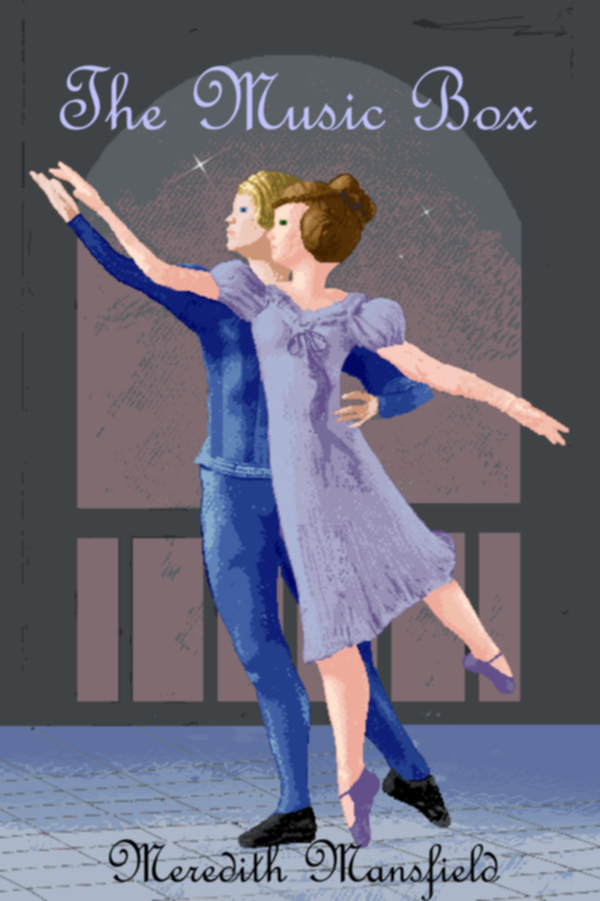
As I work my way toward completing the revisions to “The Music Box”, I have to start thinking about the next step: a cover. I’m not in a position to pay for a cover designer–at least not yet–so this is something else I have to do for myself. Hopefully, I’m getting better at it.

The cover is critically important. It’s the first impression a reader has of the book. A poor cover understandably makes them question the quality of the work inside. You can see my first two covers over in the sidebar.

The cover for “Heart of Oak” is based on a photo of mine. No issues about copyright, there. But it’s not a great cover. It’s busy and, besides that, it just looks like a blob in gray scale. Most e-readers are black and white. I hadn’t learned to take that into consideration when I did that cover. At some point, I’m going to have to redo it.

The cover for BLOOD WILL TELL is better. It’s based off of a couple of very old engravings. It works well in gray scale, but there’s still something about it. Maybe it’s the background. At some point, I’ll have to redo it, too.

So, now I’m working on the cover for “The Music Box”. Actually, I’ve been working on this for a while, but none of my ideas have worked out. Let’s face it, a picture of a music box is pretty boring.

I think, however, that I may have finally hit on something that will work. This is still very much a work in process. The color is less than half done–and may change without warning. There’s a lot of clean up needed. Unfinished Cover for "The Music Box"This will give you an idea what it might look like.


Read Full Post »

« Newer Posts - Older Posts »