Feeds:
Posts
Comments

Posts Tagged ‘world building’

TheWorldBuildingBlogfest

Day 4 of the World Building Blog Fest hosted by Sharon Bayliss is about Culture. Since the protagonist of THE BARD’S GIFT is Astrid, a sixteen-year-old girl with an unusual gift, I choose to blog about the position, treatment, and role of women.

Women did have different roles than men. Women’s work was generally done inside the longhouse (a norm that Astrid breaks routinely). Men did the heavier, dirtier work outside.

The Norse culture was extremely violent. However, there was at least one major exception: the treatment of women. Offering any kind of violence to a Norse woman was considered unmanly. Notice, I specified Norse women. The same consideration was not extended to captive women or women encountered on Viking raids. At home, though, a man or boy simply did not raise his hand to a woman. Even accidentally harming a woman was considered shameful.

Women oversaw the finances of the family and sometimes oversaw the farm as well. As widows, they could become wealthy landowners in their own right. Women could easily divorce their husbands and upon divorce, both the dowry and the bride price became her property.

Interestingly, about the only form of magic that was considered good (as opposed to evil) was prophecy–and prophecy was exclusively the province of women.

Read Full Post »

 TheWorldBuildingBlogfest

Day 3 of the World Building Blog Fest hosted by Sharon Bayliss is about Religion, so today I’m going with something a little more fun: mythologies.

The Norse had stories about dragons, like Fafnir. Dragons were cunning and dangerous symbols of greed and ultimate evil. In Norse stories, they were all things that some hero, like Sigurd, had to kill.

But, when the Norse in THE BARD’S GIFT move into the heart of North America, they come up against a new creature that doesn’t quite fit into any of the mythologies they know, though in some ways it resembles the dragons of their legends–the thunderbird.

KotP - Witchita, KS - #10

KotP – Witchita, KS – #10 (Photo credit: wes_unruh)

Thunderbird is a creature of Native American legend. Generally described as a huge rainbow-colored eagle. In the Pacific Northwest, Thunderbird is often depicted carrying off a whale in much the same way that a bald eagle might carry off a salmon.

Thunderbird is strongly associated with storms. Its wing beats gather the clouds and cause the thunder. Opening and closing its eyes or beak create lightning.

In some stories, Thunderbird is solitary. In others, there’s a community of thunderbirds. In the Pacific Northwest, Thunderbird could remove his feathers and bird head like a cloak and take human form.

Thunderbird is also a defender of mankind, but one that’s easy to annoy. Thunderbird must always be approached with utmost respect and caution. So, people who were used to thinking in terms of dragons, might just have a hard time dealing with thunderbirds, instead, don’t you think?

Read Full Post »

TheWorldBuildingBlogfest 

Day 2 of the World Building Blog Fest hosted by Sharon Bayliss is about history. Here’s the history behind what happens in THE BARD’S GIFT:

The High Middle Ages coincided with a climatic period called the Medieval Warm Period. The North Atlantic region was warmer then than it is now. For example, winters were mild enough to grow wine grapes in England.

This is the age of the Vikings, a period of expansion throughout Europe, but especially in the North. The Norse raided throughout Europe and into the Mediterranean. They created Norse settlements almost everywhere they went. At this time, they also discovered and settled Iceland.

Iceland technically owed allegiance to Norway, but they were far enough away to have considerable independence for the first couple of hundred years of the settlement. There was no hereditary nobility in Iceland. The Icelanders developed their own form of government, based on regional chieftains and an annual gathering called the Althing, where they would hash out any disputes or changes in the laws.

Soon after the discovery of Iceland, a ship got blown off course and discovered Greenland. Some time later, Erik the Red, a man with apparent anger-management issues, was sentenced to lesser outlawry–three years of exile–for killing another Icelander in a dispute. Erik spent his exile in Greenland. When the period of banishment was over, he returned to Iceland and gathered settlers to return to Greenland. Even during the relatively temperate Medieval Warm Period, the passage was risky. Twenty-five ships left Iceland for Greenland and only fourteen arrived.

Greenland at the time really would have been green, at least along the fjords, with plenty of grass for the Vikings’ livestock. There would even have been stands of birch trees in the most sheltered parts of the fjords, which the settlers used to build their longhouses. Archaeology tells us that the original settlers’ diet came 80% from the land and only 20% from the sea, despite plentiful schools of cod just off Greenland. Nevertheless, the Greenland settlement was never completely independent. The Greenlanders were always partly dependent on trade with Iceland and through Iceland with Europe.

The Greenland settlement was also never very large. There were about 600 farms in three enclaves–the largest East Settlement (500 farms), the West Settlement (95 farms), and a small scattering of farms in the Middle Settlement (20 farms), which is sometimes considered part of the West Settlement. (This story begins in the Middle Settlement.) At its height, there may have been between 4,000 and 10,000 Greenlanders.

In 985, shortly after Greenland was settled, another ship was blown off course and discovered that there was still more land farther to the west–North America. Fifteen years later, Erik’s son Leif the Lucky led an expedition to explore this new land. They named three separate areas.

Helluland, meaning “land of flat stones”, is almost certainly in northern Canada, possibly Baffin Island.

Markland, meaning forested land, is probably the area around the Saint Lawrence River. This would have been a very important discovery to the Greenlanders. Iceland’s forests had all been harvested and so had much of Greenland’s. Wood was needed for building ships and longhouses, as well as for cooking and heating.

The location of Vinland is unclear, although it is certainly farther south. Vinland may be named for wild grapes (or other native berries such as gooseberries that the Norse mistook for grapes) or it may refer to pastureland. Since the Norse lived largely off their flocks of sheep and herds of cattle, this would also have been an important discovery for the Greenlanders.

There was certainly a Viking habitation at L’Anse aux Meadows. It was probably a gateway camp used as a place to make repairs, and possibly over winter on voyages to Markland or Vinland, but not a permanent settlement.

The Greenlanders made several attempts to establish a colony in Vinland, but failed for several reasons. The main one appears to be that they just couldn’t keep from getting into fights with the local Native Americans, who were far more numerous. Ultimately, the Greenland settlement, which was itself a fairly recent colony, just wasn’t large enough or rich enough to sustain another colony at that distance in a hostile environment.

However, the Greenlanders did continue to make regular voyages to Markland to harvest timber until at least 1347, within 150 years of Columbus’s voyage to “discover” the New World. The Vikings’ usual method of navigation was to sail to a known location at the same latitude as their destination, then sail directly west or east. The passage from Greenland to Helluland and beyond, however, could also be made by following the Greenland current north along the Greenland coast to the Nares Strait, which separates Greenland and Ellesmere Island by only about 15 miles at its narrowest. From Ellesmere Island, nearly constant northerly winds and the south-flowing Labrador Current could carry them to Helluland and then on to L’Anse aux Meadows. This is the route detailed in Erik the Red’s Saga.

Graphical description of the different sailing...

Graphical description of the different sailing routes to Greenland, Vinland (Newfoundland), Helluland (Baffin Island) and Markland (Labrador) travelled by different characters in the Icelandic Sagas, mainly Saga of Eric the Red and Saga of the Greenlanders. Modern English versions of the Norse names. (Photo credit: Wikipedia)

In the 14th century, the climate began to shift toward the cold period known as the Little Ice Age. The weather became much colder. There were more frequent and fiercer storms. This was a one-two punch to the Greenland settlements. It was harder to survive by the Viking way of life in Greenland. By the end of the settlement, archaeology tells us that the settlers’ diets came 80% from the sea and only 20% from the land, the reverse of what it had been at the beginning of the colony. The storms and the increase in sea ice also made travel between Greenland and Iceland more hazardous. There were years in which no trade ship made it back to Greenland.

History tells us that the Greenlanders starved to death, probably in the 15th century. But there are at least three other things that they could have chosen to do.

The last written records of the Norse Greenlan...

The last written records of the Norse Greenlanders are from a 1408 marriage in the church of Hvalsey – today the best-preserved of the Norse ruins. (Photo credit: Wikipedia)

They could have tried to sail back to Iceland. Political changes in Iceland would have made this undesirable for them, especially after the settlers’ families had been living in Greenland for 400 years or more. As in the story, that voyage had become hazardous.

They could have learned the techniques of the Inuit who were also living in Greenland at that time. The Inuit survived the Little Ice Age in Greenland, but the Vikings had contempt for them and seem to have been much too determined to stick to a way of life that wasn’t well suited to Greenland.

Or they could have tried again to colonize North America. There is some disputed evidence that Vikings might have made it into the heart of North America. To do this, they would essentially have had to sail to that part of the map that medieval mapmakers would have labeled “Here be Dragons”. That, of course, is how this story started.

Read Full Post »


 TheWorldBuildingBlogfest


Today is about Geography (including endemic wildlife) and Climate in the World Building Blog Fest hosted by Sharon Bayliss.

THE BARD’S GIFT is set in the late 14th century primarily in Greenland, Newfoundland (L’Anse aux Meadows) and up the Saint Lawrence River. I would love to be able to actually go to those places (and a few in between), but unfortunately I live on the opposite coast, so that’s just not practical right now. That means I had to do a lot of internet searches and find photographs that could inspire me.

My research did turn up some odd ball things. One of them was the Greenland shark. Yes, such a creature really does exist–and figure in my story. You can’t waste a find like that.

 The Greenland shark

The Greenland shark is the most northerly of its kind and one of the largest–about the same size as a great white shark or up to 21 feet long and weighing over a ton. Parts of polar bears and reindeer have been found in the stomachs of Greenland sharks.

The flesh of the Greenland shark is actually poisonous. To make it edible, it must be either boiled, with several changes of water, or pressed and dried. Traditionally, this pressing was done by placing the gutted shark in a hole dug in gravelly sand. This hole also had to be on a rise, so that the liquids pressed out of the shark would drain away.  Then sand, pebbles, and rocks were piled on top to press the shark meat. It was left this way for up to three months. Then it was dug up, cut into strips, and hung to dry for another four or five months. That’s a really long preparation time.

The cured shark meat, called kaestur hakarl, is still served as part of the midwinter meal in Iceland. It’s said to still have a strong ammonia smell, which causes many people to gag the first time they eat it. First timers are advised to hold their noses because the smell is supposed to be stronger than the taste.

I’m sorry. I don’t eat what can’t get past my nose. And no, I didn’t make my characters eat kaestur hakarl, either. The shark gets away.

Read Full Post »

TheWorldBuildingBlogfest

I’ve decided to participate in the World Building Blog Fest hosted by Sharon Bayliss. That means I’ll be posting every day this week with something about the world of THE BARD’S GIFT, my young adult alternate history, so keep checking back for new posts Monday through Friday.

By the way, there’s information about some of the other worlds I’ve built for my writing on the page labeled “Worlds”.

Read Full Post »

The first part of my revisions for this next phase of Pitch Wars was all about deleting. My mentor made me realize that there was too much foundation in those first few chapters–too much space dedicated to letting the reader know how things worked. The reader needs enough of that to make sense of the story, but not quite as much as I had put in. I may be fascinated by world building, but that doesn’t mean it will engage the reader.

So, the first thing I did was to delete approximately 10,000 words. Ouch.

As I went through, there were small places where I could add a little more. Mostly, these were places where I could do a better job of showing a character’s emotions, for which I remain indebted to The Emotion Thesaurus. That adds up gradually, because showing generally takes more words than just saying that a character is sad or angry, etc.

Now, though, I’ve come to the first place where I’m adding back serious word count. It’s a place near the middle of the manuscript where I can do a lot more showing–as in scenes, not just paragraphs–about how this character begins to move from one state to the next. It’s an important point for this character and I think it not only can support, but that it needs the extra foundation.

I’m really happy with this.

Read Full Post »

You think trying to sum up a whole novel in 250 words for a query is hard? Try a 35-word pitch. They’re evil, I tell you.

This is what I’ve got so far:

Casora was raised as a warrior. Tiaran can barely swing a sword, but he knows palace intrigue. To win the war and make a place for themselves, they’ll both have to stretch beyond their limits.

I have to get this and the first 250 words ready for the alternate round of Pitch Wars by Sunday.

The first 250 words have changed, too. Sometimes, you just need someone to slap you on the side of the head. After getting the revision notes from my mentor and taking a couple of days to digest them, I realized that there was too much world-building in the first few chapters. Not that the world-building was bad, just misplaced. It got in the way of letting the story really get rolling. Just because I love world-building doesn’t mean it’ll draw a reader in. Well, sometimes . . .

Anyway, here’s the new first 250 words:

Casora restrained the impulse to get up and pace across the floor of the command tent. She couldn’t show emotion, not even frustration, in front of her troops, but the continued silence from home was troubling. She reached up to rub the little scar above her right eyebrow.

She glanced up at the mountains visible through the open tent flap. The snow crept lower every day and so did her hopes of a recall order to let the troop over-winter at home. Casora dreaded the prospect of a winter stuck in camp with a troop made up entirely of homesick teenagers and every one of them carrying the potential of the berserker curse. She’d better start planning a lot of training exercises.

“Riders coming!” The shout came from the lookout to the east, toward home. After a pause, the lookout added, “Two of them.”

Only two riders? She’d sent three out.

Casora walked to the front of the tent and cursed under her breath. They were her scouts all right, but whatever orders they brought had better be end-of-the-world urgent. There was no other excuse for abusing the horses like that. Then she realized that Varana’s braid was redder than it should be–blood red. Casora took off running. So did others from all parts of the camp. Varana fell off the winded mare just as Casora reached her.

“Report,” she said, but more quietly than her usual command voice.

“Stumbled into a scouting party just inside the pass. Ambushed.”

And that’s what I’ve been doing for the last few days–and will be for the next couple, too.

Read Full Post »

I gave up making resolutions a couple of years ago. No one keeps them. Instead, I try to make goals. Goals–good ones, anyway–are concrete and are able to be broken down into achievable steps. There’s a much better chance of at least making progress toward a goal than there is of keeping a resolution. At least, there is for me. So, here are my writing goals for 2013:

  1. Get THE BARD’S GIFT in shape to start querying it. It’s going out for critiques this month. Then revisions and polish. Plus, of course, getting the query in shape and writing the evil synopsis.
  2. Get MAGE STORM into shape to start querying it again. It’s been off the market since last March. This one is still in the hands of a very thorough critique partner.
  3. FIRE AND EARTH, too. This one is currently in the hands of a mentor from Pitch Wars. Once I hear back, beat it into shape and get it out there again. If I haven’t found an agent for one of the above by the end of 2013, I’ll e-publish FIRE AND EARTH.
  4. Whip BLOOD IS THICKER into shape and e-publish it.
  5. Enter Writers of the Future at least one quarter.
  6. Write the first drafts of two new novels. One will be the rewrite of MAGIC’S FOOL (which I have outlined and ready to go). The other will likely be one of the two shiny new ideas that came to me in the last couple of months. I’m excited by both of them, but I have more world building and prep work to do before either is really ready to go.
  7. Learn and improve.

I have a list of personal goals, too, but this post is already long enough.

Happy–and productive and successful–New Year!

Read Full Post »

. . . of the best possible kind.

I’ve finished my drafts of THE BARD’S GIFT, ready for readers next month. I’ve got two other projects–FIRE AND EARTH and MAGE STORM–currently out and I’m expecting revision notes back on both. I’ve been revisiting some short stories that have been waiting for a little attention–and I’m getting excited about one. I think I finally see the way to make it better, as opposed to just tweaking it.

But that’s the background. The new year is almost upon us and it’s time to start planning my next project and get ready to plunge back into first draft mode after all this revision stuff. And I have a number of projects to choose from:

  1. It could be a rewrite of my embarassing first novel. Most uncharacteristically, I actually have an outline for this one. There are a couple of decisions I’d still have to make, but I basically know these characters and where the story would be going. (By the way, this is the same world as my short story “Becoming Lioness”.)Becoming Lioness Cover
  2. It could be a shiny new idea I had just a couple of months ago. A twist on “The Wizard of Oz”–if Oz was much more like a magical Jurassic Park than Munchkinland. I wrote a flash story based on this idea, but I’ve got a lot more world-building, not to mention plot development, to do before I’d be ready to start.
  3. It could be a fairy-tale retelling based (loosely) on “Little Furball”.
  4. Or a retelling of an old Welsh tale, Culluch and Olwen.
  5. Or another alternate history that’s been bouncing around in my head for the last month or so. This one could be a series. Maybe even *gasp* epic.

Decisions, decisions.

Read Full Post »

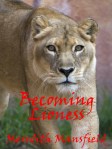
My novelette, “Becoming Lioness” will be e-published next week. Here’s the cover:

h


And the blurb (subject to editing):

Living among a people who distrust magic in any form, Kiara has a secret. She can sense magic in others and she’s maddeningly sure that she has the potential for magic, too. She just can’t quite reach it. Considering the way her people react to magic, that might be just as well.

 When her people are threatened, Kiara must make the choice whether to reveal her hidden talents in order to save them. And to trust the one man who can help her learn to use her magic–the same man who betrayed her trust once before.

By the way, this story takes place in one of the worlds you can find on my “Worlds” page. Look for the Dardani for some insight into the background of this story.

Read Full Post »

« Newer Posts - Older Posts »