Feeds:
Posts
Comments

Posts Tagged ‘inspiration’

On Friday, while I was out running errands, a bright, shiny, new idea hit me between the eyes.  Don’t you love it when that happens? My mind happily followed this idea down its rabbit trails and provided me with a good slice of world building before I even got home. (I jotted notes down on the back of my grocery list.)

It’s a bit of a departure for me, but that’s okay. It’s good to stretch outside the comfort zone now and again.

The temptation, always, is to act like a magpie and follow the bright, shiny, new idea wherever it leads because, well, new ideas are sexy. But I’m not going to do that–at least not yet.

I’m in the middle of revisions for the next couple of months, one way or the other. I’m not ready to start a new first draft. A new idea needs time to grow and accumulate a few other ideas as it rolls around in my head. Time to develop more fully.

Very fortunately, there’s a new challenge up on Hatrack River that this story idea fits pretty well. That allowed me to take the edge off the need to go after the new idea to the exclusion of all else by writing a quick flash based on it. It’s not–not by a long road–the whole idea, but it let me put a little first-draft love into it without telling the whole story.

I think this is a young adult story, although it could be done as middle grade. That’s one of the things that letting the idea brew a little will help me decide.

So now the question is which of two possible stories I’ll be starting. I think I know what I’ll be working on for most of next year either way.

In other news, I happened on a photograph that completely revised my idea for the new cover of BLOOD WILL TELL. I’m working on a totally new concept with a couple of options for how to get there. Maybe I’ll have enough of it together to show by my next blog post.

Read Full Post »

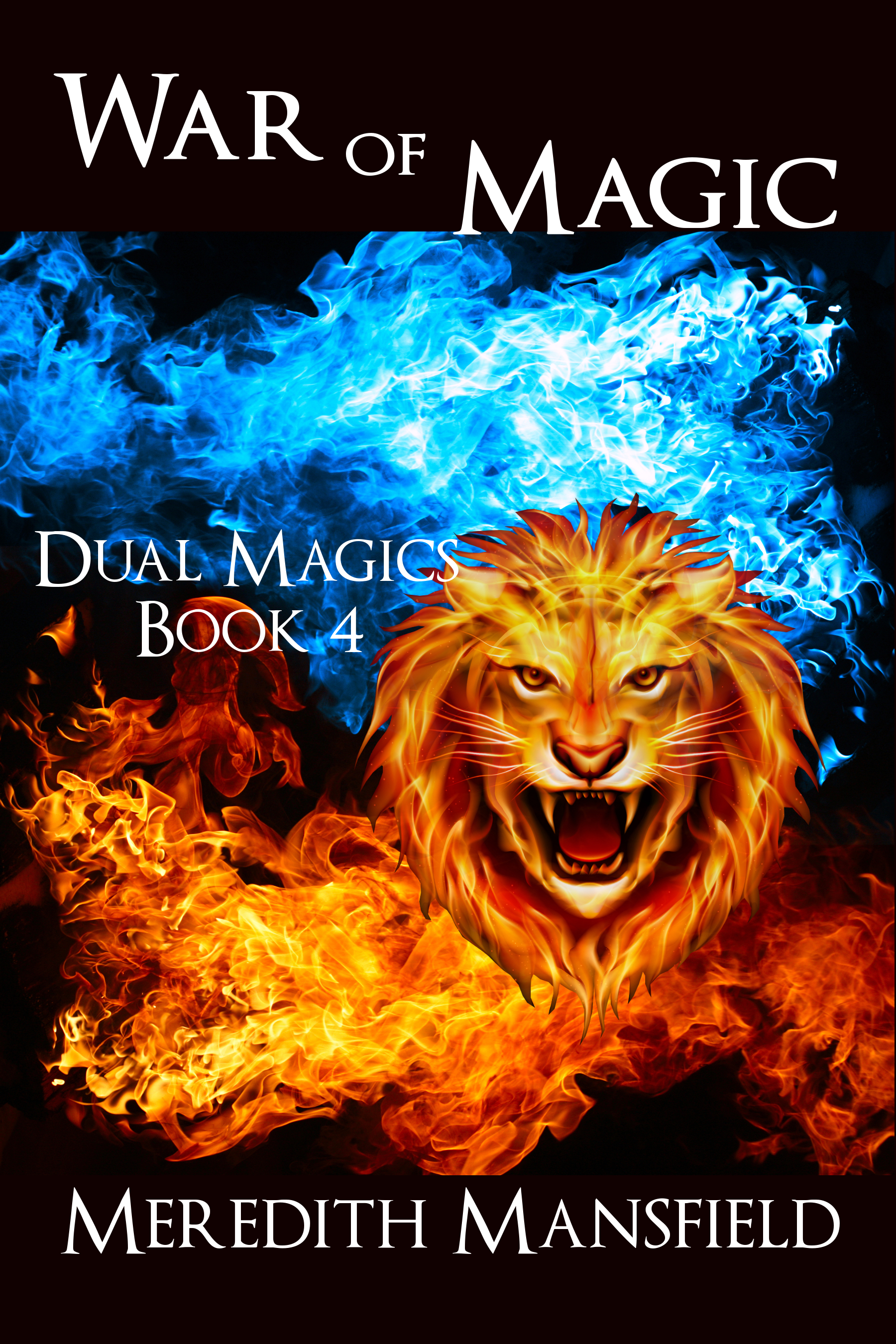
First an announcement: For the month of July, BLOOD WILL TELL and “The Music Box” are both half-price at Smashwords as part of their Summer/Winter Sale. (Clicking on one of those pretty pictures of the covers over to the side there will take you straight to them.) “Heart of Oak” is technically part of the sale, too, but it’s still free. Half of zero is still zero. At Smashwords, you can get a version for any e-reader or any computer. Just about everybody has some way to read a .PDF. So what are you waiting for, BLOOD WILL TELL is only $1.50 and “The Music Box” is only $0.99.

Now that that’s out of the way, I’m going to talk about ideas, because I had what I think is going to turn out to be a pretty good one last night, right before I went to sleep. That means I had to bounce out of bed, jot it down, and go back to sleep, but I don’t mind. Just going to sleep or waking up, walking the dogs, and in the shower seem to be the best times for brainstorms.

This idea is for my current wip, THE BARD’S GIFT. That’s fine. I’m about three-quarters of a discovery writer, so there’s no outline I have to revise to fit this in. In fact, the idea came at just about the perfect time. I’m just about to finish up act one, which has to stay fairly close to accurate history, and move my characters to someplace new and exciting.

This is the alternate part of alternate history. Since none of this ever really happened, I get to let world building take the place of at least some of the research. Obviously, not all. My characters are going to carry with them the same beliefs and social norms they had before. They’re going to build the same kind of houses and try, at least, to maintain the same way of life. But, they’re going to be faced with a new world (literally, the New World) with new experiences in store.

I’d always known there were going to be dragons in this new world. (There often seem to be dragons in my stories.) I’ve had a few new ideas about how the characters will choose to deal with that. My great new idea, though, is to sort of mash up the two mythologies–Old World and New.

I haven’t got it all worked out yet, but I will say this: look for thunderbirds as well as dragons. And don’t be surprised if the thunderbirds ARE the dragons.

Read Full Post »

Mom

Well, it’s Mother’s Day and the same people that took care of Dad are coming out tomorrow to assess Mom for hospice care, so it seems like a good day to look back.

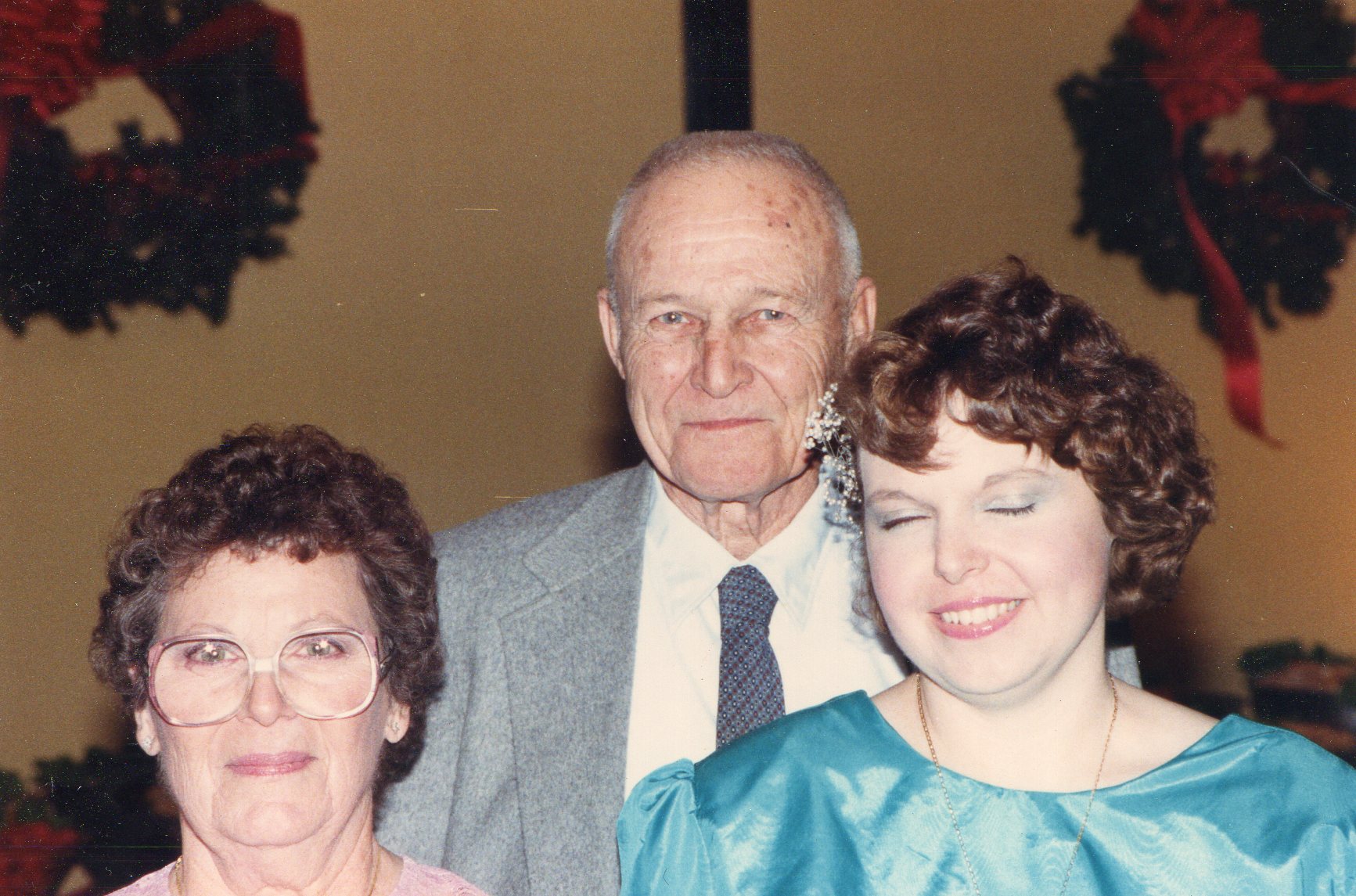
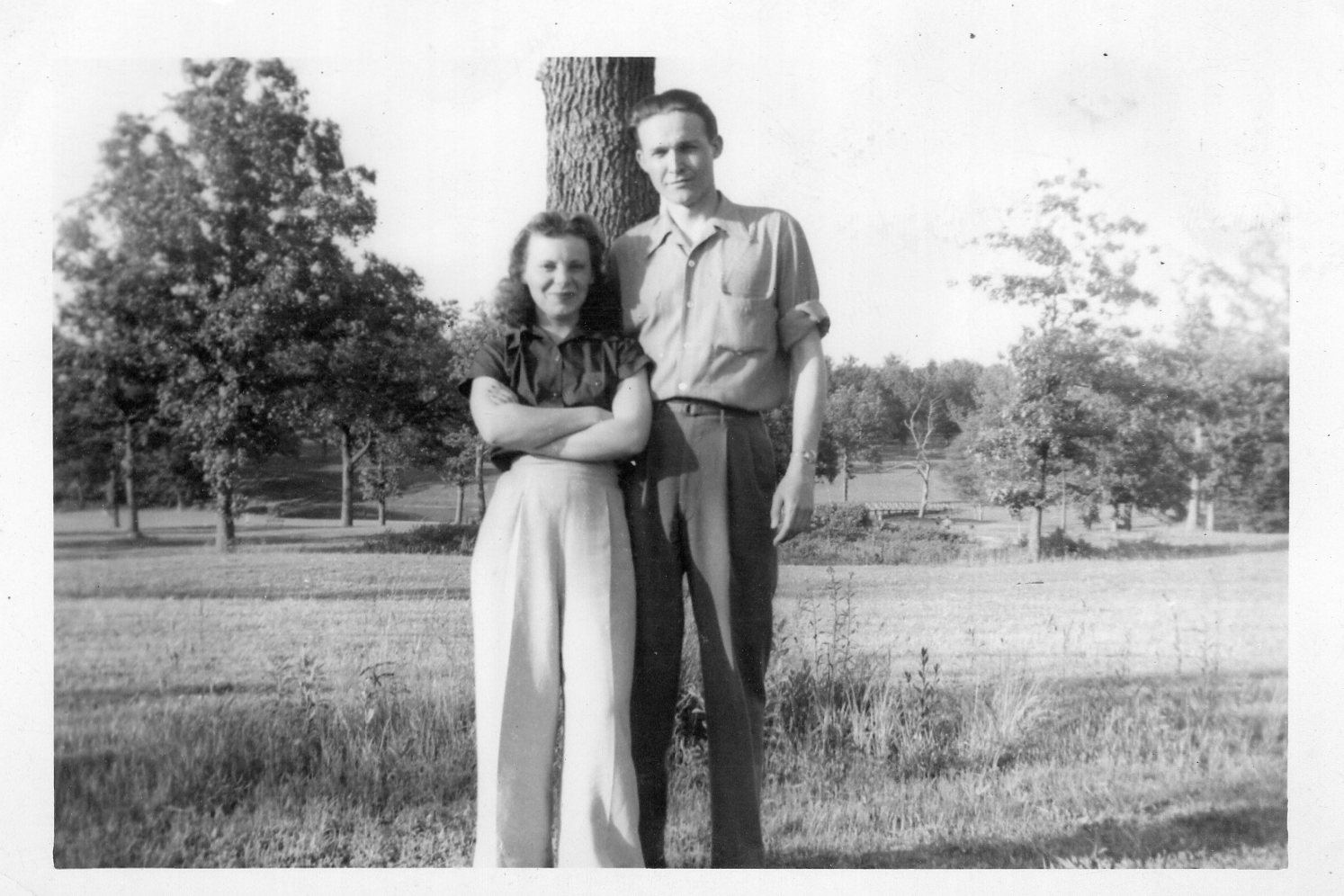
This is Mom when she was young. Several years before I was born, so I don’t actually remember her this way.


This is Mom and Dad together, again several years before I came along.

If you read any of my stories (hint: BLOOD WILL TELL) and encounter a petite fireball for a female character, well, now you know where that inspiration came from.

Mom, Dad, and me at their 50th wedding anniversary. (Disclaimer: this should not be considered anything close to a current photo of me, either.)


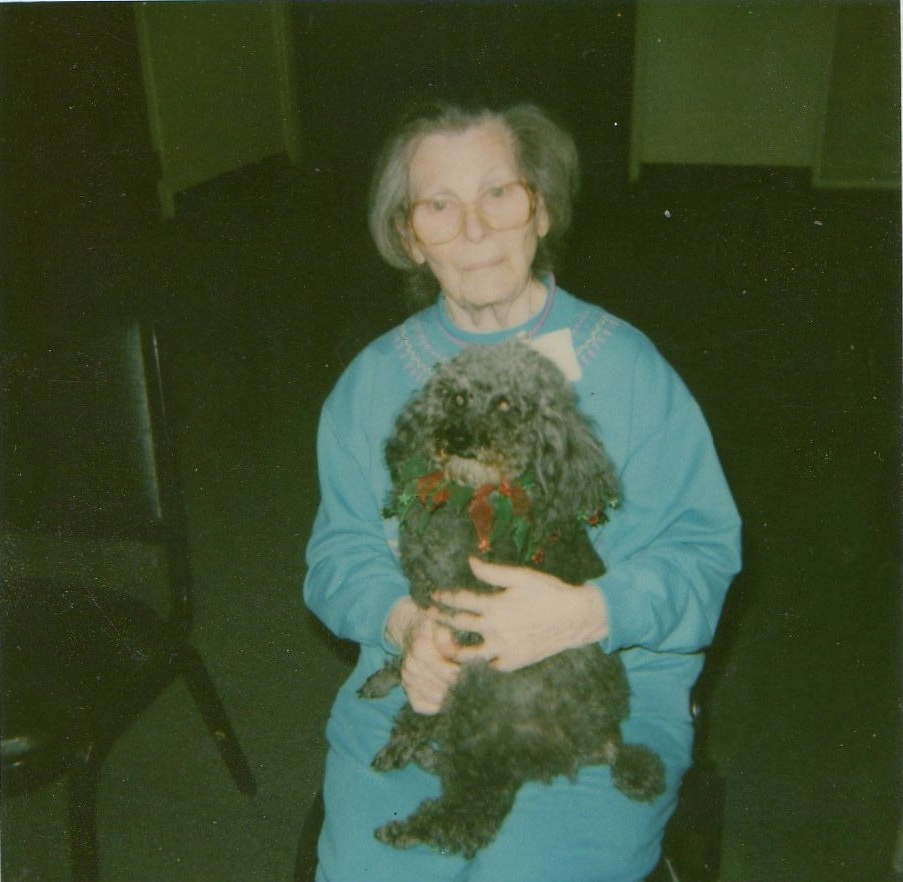
This is Mom with a therapy dog that used to visit the Salvation Army Adult Day Care Mom attended for years. Unfortunately, the ADC closed a year ago. I give them and the stimulation they provided a lot of credit for the long plateau Mom had in the progression of her Alzheimer’s disease.


I could add a more recent picture, but it only gets more depressing from there. This disease steals so much. It’s twelve years now since her diagnosis. Sometimes it’s hard to remember the energetic lady who always seemed to be ready to take on the world. The things she taught–and sometimes tried unsuccessfully to teach–me will always be with me, no matter what. She encouraged me to read and to write, although I didn’t really get serious about that until it was too late for her to understand much about it.

Happy Mother’s Day, Mom. Love you.


Read Full Post »

A theme is the central concept of a story. I don’t generally write a story with a theme in mind. However, it often happens that when I finish a story, I realize that there is a theme in there. When that happens, I can use that knowledge to inform choices that I make in the revisions to strengthen that theme, if I want to. Often, I don’t even ask myself what the theme is. I’m focused on telling a good story. Though, when I do, I can usually identify it pretty quickly. Sometimes, it surprises me.

For example, MAGIC’S FOOL, and in fact the entire series that starts with MAGIC’S FOOL, is about acceptance in various forms. (I really am going to have to think of a title for the series as a whole soon. Something to do with the two kinds of magic, I think.) In this case, though, it’s a little different for me because MAGIC’S FOOL and it’s sequels are rewrites of earlier stories with the unfortunate titles THE SHAMAN’S CURSE and THE IGNORED PROPHECY (TSC and TIP for short). Now that I’ve decided it should be a middle-grade story, the events of TSC with a little of TIP thrown in will be broken down into three separate stories. The fourth book in the series will cover the central plot that was planned for the end of the original trilogy, but never written. It’ll actually flow much better this way.

What’s different this time is that I recognized the theme in those earlier versions, so I could construct the story around it in the first draft of the rewrites.

In MAGIC’S FOOL, the theme actually comes close to also being the central conflict as the protagonist has to learn to accept the things that make him different from who he expected to be. That works, I think, as a good middle-grade internal conflict. My beta readers who have it now will let me know if they feel bludgeoned by it, I hope. But I don’t think it came off as that strong. The two critiques I have back so far haven’t mentioned it, at least.

Still, that conflation of the theme and the central conflict is not something I necessarily want to continue throughout the series. In this case, I’ll have to be aware, not of what theme is developing in my story, but of keeping the theme and the central conflict at arm’s length.

That’s a little different than my usual course, where I don’t even recognize the theme until I finish the first draft. In the long run, of course, that’s all to the good: a learning opportunity.

Read Full Post »

Well, last month I finished up the first draft of MAGIC’S FOOL and turned my attention back to BLOOD IS THICKER.

BIT had run off into the weeds about half-way through November and I had to figure out how to get it back on track. It’s a first draft. These things happen sometimes. Sometimes, even if you outline–which I do only in very broad strokes–you get to a place in the story and realize your characters simply refuse to do what you’d planned for them. Then you have to break out the carrots or the whips and try to drive them back out into the storm.

In this case, I’d brought my main characters back to something that is endangered that they are trying very hard to protect. (No, I’m not going to tell you what. You’ll have to wait and read it.) Anyway, one of the people who had promised to guard this something for them so they could go out and seek a solution had let them down. They came back just in time to avert disaster. It was an important point for the two main characters, who had been somewhat at odds, to come back together again.

Now, the problem was to find a way to get them to leave again. Obviously, they can’t put their faith in that character again. Their obvious motivation would be to stick right there. The quest so far hadn’t really required their particular talents; others could do it just as well. So, I needed to figure out how to push them out of the nest (so to speak.)

I needed some inspiration. By letting my subconscious turn this problem around, I found a complication that makes their quest more urgent. It also ties in neatly with a subplot I’d set up earlier. I also found a way to use their peculiar talents–something the other characters can’t do as well.

So, all’s well with BLOOD IS THICKER again. All I need to do now is build some momentum.

I will say, though, it’s interesting switching gears between a middle grade fantasy and a paranormal romance.

Read Full Post »

As a fantasist, this isn’t something I deal with all the time. Usually, I get to take bits and pieces from all over and fit them together in new and interesting ways, glued together with a little imagination. That’s how my world-building usually works.

I did a bit of research on my very first (now shelved) novel, because the protagonist was a blacksmith. I needed to know at least enough about blacksmithing to not make any really obvious mistakes, like setting the forge out in the open. (Always at least partially enclosed so the smith can see the color of the heated iron he’s working on.)

Now, however, I have two projects on which I need to do a bit of research. One is a current project and the other is a future project.

BLOOD IS THICKER is the sequel to BLOOD WILL TELL. As a paranormal romance/urban fantasy, it’s mostly set in either a world I created out of whole cloth or the world I actually inhabit. However, there’s one element in this story that’s going to force me to do a bit of research into, of all things, geology. That’s because the central conflict of this story revolves around someone’s attempt to import geothermal energy technology to Chimeria without proper safeguards. It’s endangering something very near and dear to the protagonists’ hearts and they have to find a way to fix the problem. Obviously, I’m going to have to know enough about geothermal energy to not make an idiot of myself. Not there yet.

The other project is THE BARD’S GIFT. This one will be an alternate history, so the need for research is pretty obvious. Actually, I don’t need to research any historical figures and I don’t need much more than the broad brush of (then) current events. This story will take place far from the centers where such things are happening. But what I do need to know is the daily-life stuff about these people: What kind of houses did they live in? What did they wear? What did they eat? Who was in charge and why? What would their relationships have been like? Basically, all the stuff I usually get to make up to suit myself.

In this case, there really isn’t a lot of information available on my real target (the original Norse Greenland settlement). But there is information on the next-best surrogate–Iceland of the same time frame. Most of the Greenland settlers came from Iceland, so it’s a reasonable assumption that they at least tried to establish the same way of life.

I got lucky and found a book that is intended to document Icelandic life during the saga age. That’s about as close as I’m likely to get. Will it be enough by itself? Maybe not. But at the least it will point me in the right directions and tell me what further questions I need to ask.

By the way, THE BARD’S GIFT does not actually take place in Greenland (although it will probably start there). It actually takes place in a Norse settlement of Vinland (or possibly Markland) in the New World that never actually happened–at least as far as we know. Of course, it’s a fantasy, so there will be some elements that no Norse explorers would have encountered. Dragons, for example.

It’s amazing how dragons of all different kinds seem to show up in so many of my stories. Couldn’t be those three dragons surrounding one end of my computer desk, could it?

Read Full Post »

I actually don’t know the answer to this. But I do know that ideas come to me when I’m writing. I can stare at a wall all day. I can try to think up a new idea. Nothing. I can’t force the ideas out of hiding that way. But start writing and here they come, like birds flocking to a newly-filled bird feeder.

Sometimes it’s when I’m actually at the keyboard. Sometimes it’s when I’m doing something else–walking the dogs, weeding the yard, driving. Just before I fall asleep is a big one. But ideas will generally only come to me during those times if I’m actively writing at some point during the day.

There isn’t necessarily a pattern to what ideas come to me, either. Most often, it’s something about the story I’m actually working on, but sometimes it’s an idea for another story that I’ve already written or an idea for a totally new story.

I think there’s a slightly higher occurrence of ideas–especially new ideas–when I’m doing original writing, as in a first draft or significant new writing in a second draft. Something about the creative juices flowing, I suppose. But revisions seem to trigger ideas, too.

Last night, before I fell asleep, I had three ideas–all at once. Two were for BLOOD WILL TELL, which I’m currently revising. Little details that can make the story more powerful. The other was a plot development for MAGE STORM. I think I’m almost ready to start on the rewrite of the first 50 pages or so of MAGE STORM. At least the ideas I need are starting to flow. More will come, probably when I actually start to work on it.

I guess the moral of this story is: Don’t stop writing and keep a notebook handy.

Read Full Post »

I’ve already confessed that I’m a discovery writer in an earlier blog post. But I don’t tackle a novel completely off the cuff. I might do a short story that way–take a concept and see where it goes. But not a novel. There’s just too much more room to run off into the weeds. Still, I have to give myself room to discover and explore because my best ideas seem to come to me while I’m actually writing. Something about keeping the juices flowing, I think.

I don’t do a classic outline, but I have tried to make what I call a proto-synopsis. But what do I put in this document? Well, more or less, the high points of the story:

  • The main conflict. (I always insist on knowing this, since it’s what makes the story hold together as a unit, but it may not actually be written in that proto-synopsis.)
  • The inciting incident. That’s obvious, of course. How can I start the story if I don’t have at least an idea where it starts?
  • The first try/fail cycle. What’s my protagonists first, and horribly insufficient, attempt to solve his problem or achieve his goals?
  • The second try/fail cycle. (This is one I’m sometimes still a little fuzzy on, even when I start writing.)
  • The climax. I pretty much always know how the conflict will be resolved when I start. It may even be one of the first scenes I jot down.
  • I don’t actually worry about the denouement at this stage. That’s one I pretty much always allow myself to discover out of the characters and what they’ve been through. I’ve been surprised by it a time or two, but that just makes it more fun to get there and find out.

Right now, I’m in the process of re-thinking this just a little. Using a proto-synopsis I think is not actually helping me as much as I hoped in writing a final synopsis. In particular, in hitting the parts of the story, I may not be giving enough emphasis to that central conflict. Something I need to consider carefully.


Read Full Post »

Having recently completed the first draft of SEVEN STARS, it feels like a good time to explore how ideas develop in a story. As mentioned in a previous post, I’m largely a discovery writer, so this evolution happens while I’m writing. I’m sure pretty much the same thing happens to a plotter/outliner, though. Just at a different point in the process.

So, fairly early on in SEVEN STARS I had my characters isolated. There’s a war on and because of some imprudent behavior by one of the characters, they’re cut off from their main army, from the capital city, and from the hidden fortress where the women and children have been taken for shelter. I knew from the beginning that at some point they would make it to the fortress through a system of caves.

When I got to that point, I had an idea to have a little fun with them. In battle, the female character is more prepared, more experienced, better trained and not afraid of much. The male character is learning, but he’s never been in this situation before. So, I decided that when they went underground, it would be fun to switch things on them. He’d be perfectly comfortable in the caves and she’d be claustrophobic.

From there, the caves became a sort of almost religious experience for him. It’s like an initiation, but only he feels it. His confidence increases in the caves, which leads to a couple of interesting side effects.

Well, at this point, the caves started to become almost another character in the story.  I decided that the caves actually were responding to his presence and that their guide would notice it. When they reach the fortress, the guide proclaims that the caves, by affecting the character in this way, have indicated that he is the heir. He’s the youngest prince, the one nobody expected anything from, and now this guy’s saying that he’s the heir because he liked the caves?

This introduced some more world-building. Not just the caves, but the notion that through the caves the land is supposed to choose the heir. The current king has been trying to circumvent that by not sending his younger two sons into the caves and suppressing the knowledge that the oldest son failed to even get through the caves.

Those ideas only come to me when I’m writing. I would never get that idea while making an outline. 

Now, of course, I have to go back and introduce a few elements a little earlier in the story to foreshadow that revelation. That’s okay. It will make the story richer. And it won’t actually take much. A couple of sentences here and there, maybe a paragraph.

Read Full Post »

Hello, my name is Meredith Mansfield and I’m a discovery writer.

And, no, I’m not looking for a twelve-step program. I like it just the way it is, thank you.

Some writers–many very successful writers–fully outline a story before they start. I know writers who have every scene mapped before they put “Chapter One” at the top of a page.  More power to them. If I outlined in that detail, I would never write the story. What would be the point? I’d already have told it.

For some of us, the more often we tell the story (and outlining is telling the story, just in a boring way), the less enthusiasm we have for it. We have to be free to find things out as we go along. We’re discovery writers or sometimes pantsers (because we write by the seat of our pants).

I set up a basic structure for my novel, so I know where I’m going. It helps to keep me from veering off into the weeds (too much). And then I start. I generally sort of outline about a chapter ahead as I go.

The fun part is, I’m learning parts of the story at the same time I’m writing the first draft. Yes, that means that I’ll have things I need to go back and add, change, or delete in the second draft. That’s okay. I make a note and move on.

But as I get really into a story, as I’m into SEVEN STARS right now, new things come into my head and I get to explore them, turn them around and look at them from the other side, and decide whether or not to put them in the story. It grows. It gets better. Things that were hazy when I wrote that proto synopsis come into focus. How to get the characters from A to B or how to accomplish that important plot point becomes clear. They’re still new and exciting and I get to write them while that excitement is fresh.

And I’m willing to bet discovery writers have more fun.

Read Full Post »

« Newer Posts - Older Posts »