Feeds:
Posts
Comments

Posts Tagged ‘research’

I’ve been reading–admittedly slowly because it’s just not as much fun as reading fiction–a graphic design book, trying to improve my understanding of what I’m doing when I design a book cover. I actually looked for a course at my local community college, but they didn’t have one. Graphic Arts, yes, but not Graphic Design, specifically.

I think typography will likely be an area where I need to get into more depth. I have a tendency to just pick a standard font and go with it.

This is particularly apropos because I’m trying to get a start on two covers right now. The one for BEYOND THE PROPHECY, the third book in the Dual Magics series. And one for DAUGHTER OF THE DISGRACED KING, a young adult fantasy romance that I wrote over a year ago.

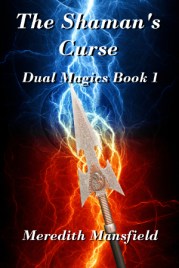
I actually have the concept for BEYOND THE PROPHECY pretty well in hand. Not that it will hurt to have a better understanding of the principals of design. But the background theme–blue and red on a dark background–is already well established. The backgrounds advance from lightning, to a veritable storm of lightning, to smoke, and finally to flames. The only thing I really need to choose for those covers is the foreground image. For BEYOND THE PROPHECY it will be a white eagle (or as close as I can get, which may be a gyrfalcon. There aren’t very many images of truly white eagles.) That might, or might not, give you an idea of what happens in the story.

DAUGHTER OF THE DISGRACED KING is proving more difficult. I think I may finally have a concept. Something I may try out on a couple of Facebook groups I belong to, to see how it flies. That’s very helpful, too.

Indie authors have to wear a lot of hats.


Read Full Post »

First, let me say that the release of THE VOICE OF PROPHECY is still scheduled for December 15th.

?????????????????????????????????????????????????????????????????????????????????????????????

Second, I know I said that I was targeting November 17th for the pre-order. That may not happen for a couple of reasons.

  1. I’m still assessing what information I can gather about Amazon’s pre-order system. I notice that people who generally know a lot more about how these things work than I do have chosen shorter pre-order periods. There’s a reason for this. (Maybe more than one.) It has to do with the way Amazon helps with the discoverability of some books. This was a huge factor for me with THE SHAMAN’S CURSE, and I don’t want to screw it up with this one.????????????????????????????????????????????????????????????????????????????????????????The thing is, Amazon has several lists. One of them–the Hot New Releases–is only available for thirty days. As far as I can tell, that could expire before the book is ever released if I start the pre-order to early. I’m not sure about that, though. I may have to contact Amazon for a final answer. It wasn’t in their FAQs.
  2. The second reason is more practical. Before I can expect anyone to order it, I need to have a good blurb. And, like everything to do with a sequel, that’s harder than it was for the first book. Trying to balance enough information, potentially for people who didn’t read THE SHAMAN’S CURSE, with an enticing peek at this story. Well, let’s just say I may not have that by the 17th. I’m leaning toward this:

When the two kinds of magic combine, unexpected things happen.

Vatar overcame his tribe’s superstitions to accept his own magic. That doesn’t mean he’s prepared to tell them about it. He’d rather keep that secret forever. Especially when unprecedented things start to happen that even the experts in magic can’t explain.

Even more when a mysterious voice only he can hear starts volunteering information Vatar can’t possible know.

After enduring an Ordeal to prove he wasn’t possessed by an Evil Spirit, Vatar now thinks he may be after all. Or losing his mind. Or cursed. It’s enough to make him want to give up on magic altogether.

But he’s going to need all his wits—and all the magic he can muster—to defeat those who want to use him and his magic for their own ends.

But that’s not right yet. For one thing, the word “magic” is used five times in as many paragraphs. For another, it lacks enough specifics to grab a new reader. And third, some of hte references are probably confusing for someone who hasn’t read the first book.

Oh, and I also have to whip a couple of chapters from the first draft of Book 3 (probably to be titled BEYOND THE PROPHECY) into shape to include as an excerpt.

Yeah, nobody said this part was going to be easy.

Read Full Post »

The name of the game with independent (or self) publishing is getting potential readers to even see your books. They can’t read it if they don’t even know it exists. For me–for a lot of authors, really–this is the hardest part. And I was determined to do better at it this time, with THE SHAMAN’S CURSE.

????????????????????????????????????????????????????????????????????????????????????????

  1. When I released BLOOD WILL TELL, I basically set it loose and expected it to fly on its own. It fluttered some, but it certainly didn’t soar.
  2. With FIRE AND EARTH, I attempted to contact book bloggers for review. I spent way too much time at it and still only got a few reviews. It takes a lot of time to find book bloggers, determine if they even like books like the one you’ve written, and contact them. Many are too backlogged to take on anything new. Even those who aren’t may take months to get to your book. It’s not that it’s not worthwhile to try to find book bloggers to review your book. Just maybe a little at a time.
  3. BLOOD IS THICKER got a paid blog tour. Not an expensive one, since that wasn’t in the budget. I also put out an omnibus edition, combining both BLOOD WILL TELL and BLOOD IS THICKER and made it the same price as either book alone for awhile. It did help.
  4. I didn’t put a lot of thought into the launch of THE BARD’S GIFT. It went up only a week or so after Christmas. But I have tried a few things after the launch. Some writer friends put together an impromptu blog tour. I tried Story Cartel to get reviews. (I got one.) I published the short story that was the starting point for THE BARD’S GIFT, with a long excerpt of TBG, and priced it free. (Everywhere but Amazon. I still haven’t succeeded in making “Wyreth’s Flame” free on Amazon.) But, to be fair, an historical fantasy set in 14th Century Greenland, Iceland, and Markland is probably just a hard sell.
  5. Taking all of this into account, plus the advice in David Gaughran’s LET’S GET VISIBLE, THE SHAMAN’S CURSE strategy has been as follows:
  • Use a free short story (“Becoming Lioness”) set in the same world as TSC, with an excerpt of TSC, to try to generate interest IN ADVANCE OF THE LAUNCH.
  • Set the initial price low ($0.99) for a limited time.
  • I’ll probably start trying to find some reviewers, too. I’ve also added a request for reviews right in the back matter of the ebook.

So far, I’ve been reasonably pleased with the result. We’re still not talking best-seller, here, but it’s better than I’ve done with any launch so far. In fact, I’ve already gotten my first review. That, after all, is the point. To get at least a little better at this with every book.


Read Full Post »

I posted a short while ago about the problem of pre-orders in connection with the launch (in less than two weeks) of THE SHAMAN’S CURSE.

????????????????????????????????????????????????????????????????????????????????????????


One of the things I’ve done since then is to do some reading. Sometimes, when you don’t see the way forward, the best thing to do is a little research. I read LET’S GET VISIBLE by David Gaughran and changed the way I’m looking at this. I highly recommend this book. I’m starting LET’S GET DIGITAL soon.

The point of having a lot sales all hit at the same time from pre-orders is hitting the popularity lists so that the book gets extra visibility. I don’t know, maybe that’s still important for traditionally published books. Not so much for independently published books, though.

The reality is that pretty much no matter what I do, my book is not likely to hit the popularity lists (those lists that suggest other books to you) on Barnes and Noble or Kobo or Apple. Those lists are still heavily weighted in favor of traditionally published books. The only place where there’s close to a level playing field for indies is Amazon.

And Amazon changed their algorithms a couple of years ago. Once upon a time, that spike in sales would have made a difference on Amazon. But then a lot of people started gaming the system–book bombs to get a lot of people to buy the book all within a narrow time window, for example. It didn’t really have anything to do with the long-term popularity of the book, so Amazon changed the way they calculate the popularity lists. Now, that one-time spike sinks right back down again in the ratings. What gets rewarded now is sustained sales over several days.

That means, I can plan to do several different things over the launch period. (I’ve already got a couple set up.) But I don’t have to–in fact I shouldn’t–put all my eggs into that one launch-day basket. Getting the word out during that first week or so is important. Maybe even the first two weeks. Frankly, that’s a lot less stressful.

I get to pace myself and remember “This is a marathon, not a sprint.”

Read Full Post »

Well, I’ve got this computer mostly up and functional, if not quite as updated as I’d like yet. That’s a relief.

And I finally made good on that commitment to finish the revisions to MAGIC AND POWER (now likely to be retitled GREEN MAGIC, because M & P is going to be the title of the series.) I’ve even got the revisions out to a couple of readers.

This week, I’m spending a good deal of my time over at IndieReCon. It’s a free, online conference about writing and indie publishing. I’ve already picked up a couple of ideas I’ll be trying out in the future and I hope to garner some more by the end of the conference. Hopefully, I’ll learn how to do a better job of my next launch than I did with THE BARD’S GIFT.

TheBardsGiftCoverSmall

In between events over there, I’m playing around a bit with the rewrite of THE IGNORED PROPHECY (sequel to THE SHAMAN’S CURSE). I’ll start in on DREAMER’S ROSE after the conference is over, when I can devote more concentrated attention to it.

Read Full Post »

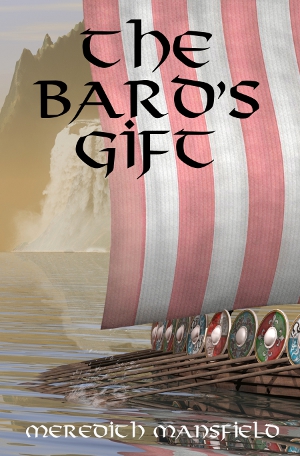
THE BARD’S GIFT, of course, is an historical fantasy. I researched the Iceland, Greenland, and the way of life there in the 14th century to get as much of the background of the story right as I possibly could. But the story is mine, not based on anything that really happened.

TheBardsGiftCoverSmallThere are other, sometimes less obvious ways, that fantasy and history meet. A medieval setting has become the default for second-world fantasy stories. Of course, some writers do medieval better than others. I still remember my confusion in reading a story in a clearly medievalish setting that nevertheless had private bathrooms with running water. Not that you can’t do that in a fantasy story. Just that you probably should provide some tiny explanation of the change. (Maybe it’s magic.)

The medieval default is so strong that an author has to work a little harder to convince readers that the setting isn’t medieval. I always seem to especially enjoy those stories. They’re like a breath of fresh air. And I’ve written a couple of them. MAGE STORM has a sort of settlement-era setting (like when farmers were first settling in the Ohio River Valley) and at least part of the setting for MAGIC AND POWER is modeled more or less on the desert southwest (without cowboys or the wild west aspects).

Sometimes history provides inspiration, too. In MAGIC AND POWER, I needed a reason for Ailsa’s family to be political outcasts. My inspiration for that was actually the Duke of Windsor, who was forced to abdicate because he married a divorced American woman (although the actual history was somewhat more complicated than that). So, just what do you do with an ex-king? And how would his presence nearby affect the new king? Those questions provide some of the external conflict for MAGIC AND POWER.

Read Full Post »

THE BARD’S GIFT officially launches on January 30th. (Actually, you can get it now on Amazon, though.)

TheBardsGiftCoverSmall

Here’s another fun fact and excerpt.

You never know what your research will turn up–or how you’ll end up using it. In this case, I was looking for fish that one of my characters might reasonably be fishing for–and found the Greenland shark. It’s a real creature.

The Greenland shark lives farther north than any other shark species. They are comparable in size to the great white shark, averaging ten to sixteen feet in length and up to 900 pounds. They can grow as large as 21 feet and over 2,000 pounds. Usually only found near the surface only during the winter, they are otherwise denizens of the deep. They have been found with parts of polar bears in their stomachs.

The flesh of the Greenland shark is poisonous, but the hardy Icelanders (and presumably the Greenlanders), had a way of leaching the poison out. Of course, it still smelled overpoweringly of ammonia, even then.

This was too good not to include in the story, especially the bit about possibly eating polar bears. Here’s an excerpt from Chapter 7 of THE BARD’S GIFT (a faering is a small fishing boat with both oars and sail) This excerpt also happens to include their first kiss:

Torolf pushed the skiff down the strand and into the water and jumped aboard. The faering had four oars, meant for two men, but Torolf had changed the rigging of the sail to make it easier for one man alone to manage the steering oar and the sail. He hadn’t had a chance to try that innovation out yet. The wind was in the wrong direction right now, but maybe he’d get a chance to test it on the way back to shore.

It didn’t take long to row out to where he judged the water was deep enough. He threw a half dozen lines over the side and began casting a net for whatever fish might be nearer the surface, stopping after each cast to watch the shore for Astrid.

He’d pulled in several nets full of herring when one of his lines jerked sharply. Torolf dropped the net into the bottom of the skiff to pull in the line. Whatever he’d caught was heavy. He didn’t think he was far enough out for halibut this large, but he couldn’t think of many other fish in these waters that would be so heavy. He continued to pull, muscles straining. Abruptly, the pressure on the line ceased and the fish–or what was left of it–flipped into the boat practically on top of Torolf. It had been a halibut all right, and a big one. Two thirds of it was missing, now, though.

Torolf stared at the ragged bite mark. Only one predator could have made that–a Greenland shark. And it’d have to be a big one to take most of a fish that size in one bite. He looked over the side of the boat and just glimpsed the sleek form below, almost half again as long as the boat. Not the biggest, but more than big enough. Unusual for it to be in this part of the fjord at this time of the year.

Torolf made a face at the thought of shark meat. The flesh of a Greenland shark was poisonous. It had to be fermented and pressed and then hung to dry for several months before it could be eaten. Even then, it smelled strongly of ammonia. Still, kaestur hakarl made in that way would be food for midwinter. By then everyone would probably be willing to overlook the smell and taste just to have a full belly. Looked at that way, the shark represented a lot of meat.

Torolf looked over the side again. No. This was a disadvantage of fishing alone; the shark was much too big for one man in a small boat to bring in. With that one swimming below his skiff, he wasn’t likely to bring in anything on any of his lines, either, so he began to haul them in. Better to go in, now, anyway. He’d heard stories of large Greenland sharks attacking small boats. With his faering half full of herring, there was no need to risk it. The wind was favorable. Now might be a good time to see how the skiff handled under sail.

He’d just gotten the sail up when he heard a shriek. Torolf turned toward the sound and saw Astrid pelting down the rocky beach, her white bear pelt cape flapping behind her. A huge ice bear galloped after her, fifty paces behind Astrid and closing fast. Torolf turned the tiller and set the faering racing toward Astrid.

The skiff was fast under sail, but no human could outrun a bear for long. Torolf shouted, “Astrid! Over here!”

Astrid looked up without breaking stride. She turned, almost slipping on the slick rocks and dove into the fjord. Her woolen dress and the heavy bear pelt immediately started to drag her down. The look on her face was even more panicked. She couldn’t swim? Of course she couldn’t. Few enough of the men could do more than tread water if they fell overboard. And that not for long in water as cold as this. Torolf steered the faering as close into shore as he dared and leaned far over to grab Astrid and pull her in.

The bear leaped into the water, too, with a splash that rocked the small boat. Torolf turned the sail and grabbed the steering oar to drive the faering back out into deep water. Not that that would be much help. He had no weapon aboard that he could hope to kill a bear with. An ice bear could swim the width of the fjord without difficulty, but an idea came to Torolf to pit one predator against another. He pulled the steering oar over a little farther to steer back to the same place where he had been fishing a moment ago.

Astrid struggled off the pile of slippery herring she’d landed on and took up a pair of oars. Her strokes were nowhere near as expert or powerful as Torolf’s, but they added to the skiff’s speed, nonetheless. As she got the rhythm, she started to pull for the home shore, where the larger boats were still pulled up on the sand.

“No,” Torolf shouted, pointing to the course he wanted. “That way. Trust me.”

Astrid paused just an instant, then she started rowing in the direction Torolf indicated.

Torolf looked back. The bear was persistent. Though the skiff was racing ahead of it, the beast still swam after them. Torolf looked ahead. They’d almost made it to the spot where he’d last seen the shark. He turned again at a furious roar close behind. The bear struggled and the water around it turned from green to red. Then the bear disappeared beneath the waves and didn’t come up again.

Astrid looked around as if she expected the bear to surface right beside them. “What happened?”

“Greenland shark. About the only thing big enough to eat an ice bear.” Torolf turned the sail and let the faering skim toward home.

The ripples of the bear’s submersion subsided. After a moment, Astrid smiled and they both erupted into gales of relieved laughter.

“What did you do to that bear?” Torolf asked when he could draw enough breath. “Walk up and tweak it’s nose.”

Astrid giggled. “No. I found a seal carcass back there. I was just going to cut off as much as I could carry with me when that bear charged down the slope and chased me off.” She plucked at the sodden bear pelt. “I think he thought I was a rival.”

“Maybe he did.” Torolf slowed the faering. “Maybe we should go back and bring in as much of that seal meat as we can. The skiff can hold quite a bit more.”

“Maybe we should.” Astrid shivered.

Torolf set the faering back toward home. “No. First you need to get warm and dry. Pa and I can go back for the seal meat. Can’t have you getting sick before we set sail for Iceland.”

Astrid ducked her head, her smile disappearing. “I guess that would be best.” She looked out over the side at the water slipping away beneath them.

Torolf watched her for a long moment. “Astrid . . . I was going to wait until we reach Iceland. Where the distance between us–poor farmer’s son and chieftain’s daughter–won’t be as great. Until I can find work and a place of my own to live. But that might take me a while and you’re so beautiful and brave. By then someone else may start to court you.” He was babbling. He paused, drew in a deep breath, and resolved to just blurt it out. “Astrid, will you be my . . . uh . . . sweetheart?”

Her eyes widened and her breath caught. Astrid stared back at Torolf. He decided that the look on her face was definitely not displeased, though. Greatly daring, he leaned forward and kissed her briefly.

When he pulled back, Astrid put her hand up to her mouth.

By her eyes, though, he could tell she was smiling. “Should I take that as a yes?”

Read Full Post »

Writing THE BARD’S GIFT

TheBardsGiftCoverSmallwas a different experience for me. I write fantasy. Usually, I just get to make things up (as long as it makes sense, anyway). That’s why they call it world building. But THE BARD’S GIFT is historical fantasy, so I couldn’t just make up anything I wanted. I had to do research to find out what kind of houses my characters would live in and what kind of clothes they’d wear and a bunch of other things.  Sometimes, interesting things turned up in this research. Some made it into the story, some didn’t.

Now, since my Norse characters go to set up a new colony in North America (in what the Greenlanders would have called Markland, around the Saint Lawrence River) I also included some things specific to North America–especially the thunderbird.

Many North American Indian tribes had stories about Thunderbird. For some, it was a singular, somewhat irascible, creature and a sometimes guardian. In the Pacific Northwest, there were said to be many thunderbirds, who could remove their feathers like a cloak and tilt their beaks up like a mask and so take human form. Those things made it into the story.

What didn’t get in was the real-life (prehistoric) birds that might have been inspiration for the Thunderbird. These teratorns, something like a cross between a condor and an eagle, actually once flew over the skies of North (and South) America.

Merriam’s Teratorn is well known from the Rancho La Brea Tar Pits. It would have weighed about 30 pounds and had a wingspan of about 10 to 11 feet. That’s a big bird.

But it’s nothing compared with it’s cousin Aiolornis Incredibilis, which weighed in at 50 pounds and had a wingspan of 16 to 18 feet. Yikes! How’d you like to see one of these fly overhead?

And both of these birds would have been in the skies when people first arrived in the New World.

The biggest of all is only known from South America. Argentavis Magnificens was the largest known flight-capable bird (though it probably soared much more than it flew). It had a 25-foot wingspan and would have weighed about 170 pounds! One of its flight feathers would have been 59 inches long (that’s almost six feet!).  (Sorry, five feet, not six. I shouldn’t try to do arithmetic in my head before breakfast.) Now that’s a Thunderbird.

I’m not making this up. Just take a look at the first chart on this site.

More fun and interesting things to come as we lead up to the launch of THE BARD’S GIFT on January 30th.

Read Full Post »

In my last post, I blogged about asking on one of my writers’ groups for someone who knows about sailing to read excerpts from my current WIP, THE BARD’S GIFT, and give me feedback on the sailing stuff.

Even though I’d done a lot of research before starting this story, there are some things that are just hard to come by in book (or internet) research. My main concern when I asked for help was certain innovations one of my characters (whose main quality is his inventiveness) made. Were they believable? Or would they be embarrassingly stupid?

I got that, but I also got so much more. Some of the sensory details that I wouldn’t ever have thought of. There are a lot of things I can convincingly describe. The sounds of a wooden boat or ship in a storm aren’t among them. And those details will enrich the story so much.

Now, there are a lot of places I might have gone to ask those questions. But, probably only another writer would have realized the importance of the sounds and other sensory details that my character would be subjected to.

Glad I asked.

Read Full Post »

 TheWorldBuildingBlogfest

Day 3 of the World Building Blog Fest hosted by Sharon Bayliss is about Religion, so today I’m going with something a little more fun: mythologies.

The Norse had stories about dragons, like Fafnir. Dragons were cunning and dangerous symbols of greed and ultimate evil. In Norse stories, they were all things that some hero, like Sigurd, had to kill.

But, when the Norse in THE BARD’S GIFT move into the heart of North America, they come up against a new creature that doesn’t quite fit into any of the mythologies they know, though in some ways it resembles the dragons of their legends–the thunderbird.

KotP - Witchita, KS - #10

KotP – Witchita, KS – #10 (Photo credit: wes_unruh)

Thunderbird is a creature of Native American legend. Generally described as a huge rainbow-colored eagle. In the Pacific Northwest, Thunderbird is often depicted carrying off a whale in much the same way that a bald eagle might carry off a salmon.

Thunderbird is strongly associated with storms. Its wing beats gather the clouds and cause the thunder. Opening and closing its eyes or beak create lightning.

In some stories, Thunderbird is solitary. In others, there’s a community of thunderbirds. In the Pacific Northwest, Thunderbird could remove his feathers and bird head like a cloak and take human form.

Thunderbird is also a defender of mankind, but one that’s easy to annoy. Thunderbird must always be approached with utmost respect and caution. So, people who were used to thinking in terms of dragons, might just have a hard time dealing with thunderbirds, instead, don’t you think?

Read Full Post »

« Newer Posts - Older Posts »