Feeds:
Posts
Comments

Posts Tagged ‘Young Adult’

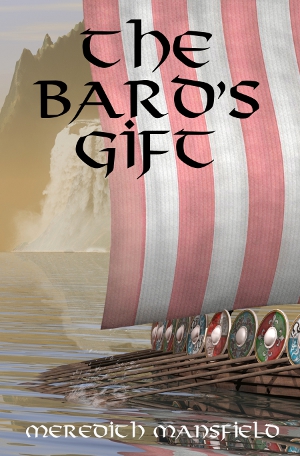
THE BARD’S GIFT officially launches on January 30th. (Actually, you can get it now on Amazon, though.)
TheBardsGiftCoverSmall

Here’s another fun fact and excerpt.

You never know what your research will turn up–or how you’ll end up using it. In this case, I was looking for fish that one of my characters might reasonably be fishing for–and found the Greenland shark. It’s a real creature.

The Greenland shark lives farther north than any other shark species. They are comparable in size to the great white shark, averaging ten to sixteen feet in length and up to 900 pounds. They can grow as large as 21 feet and over 2,000 pounds. Usually only found near the surface only during the winter, they are otherwise denizens of the deep. They have been found with parts of polar bears in their stomachs.

The flesh of the Greenland shark is poisonous, but the hardy Icelanders (and presumably the Greenlanders), had a way of leaching the poison out. Of course, it still smelled overpoweringly of ammonia, even then.

This was too good not to include in the story, especially the bit about possibly eating polar bears. Here’s an excerpt from Chapter 7 of THE BARD’S GIFT (a faering is a small fishing boat with both oars and sail) This excerpt also happens to include their first kiss:

Torolf pushed the skiff down the strand and into the water and jumped aboard. The faering had four oars, meant for two men, but Torolf had changed the rigging of the sail to make it easier for one man alone to manage the steering oar and the sail. He hadn’t had a chance to try that innovation out yet. The wind was in the wrong direction right now, but maybe he’d get a chance to test it on the way back to shore.

It didn’t take long to row out to where he judged the water was deep enough. He threw a half dozen lines over the side and began casting a net for whatever fish might be nearer the surface, stopping after each cast to watch the shore for Astrid.

He’d pulled in several nets full of herring when one of his lines jerked sharply. Torolf dropped the net into the bottom of the skiff to pull in the line. Whatever he’d caught was heavy. He didn’t think he was far enough out for halibut this large, but he couldn’t think of many other fish in these waters that would be so heavy. He continued to pull, muscles straining. Abruptly, the pressure on the line ceased and the fish–or what was left of it–flipped into the boat practically on top of Torolf. It had been a halibut all right, and a big one. Two thirds of it was missing, now, though.

Torolf stared at the ragged bite mark. Only one predator could have made that–a Greenland shark. And it’d have to be a big one to take most of a fish that size in one bite. He looked over the side of the boat and just glimpsed the sleek form below, almost half again as long as the boat. Not the biggest, but more than big enough. Unusual for it to be in this part of the fjord at this time of the year.

Torolf made a face at the thought of shark meat. The flesh of a Greenland shark was poisonous. It had to be fermented and pressed and then hung to dry for several months before it could be eaten. Even then, it smelled strongly of ammonia. Still, kaestur hakarl made in that way would be food for midwinter. By then everyone would probably be willing to overlook the smell and taste just to have a full belly. Looked at that way, the shark represented a lot of meat.

Torolf looked over the side again. No. This was a disadvantage of fishing alone; the shark was much too big for one man in a small boat to bring in. With that one swimming below his skiff, he wasn’t likely to bring in anything on any of his lines, either, so he began to haul them in. Better to go in, now, anyway. He’d heard stories of large Greenland sharks attacking small boats. With his faering half full of herring, there was no need to risk it. The wind was favorable. Now might be a good time to see how the skiff handled under sail.

He’d just gotten the sail up when he heard a shriek. Torolf turned toward the sound and saw Astrid pelting down the rocky beach, her white bear pelt cape flapping behind her. A huge ice bear galloped after her, fifty paces behind Astrid and closing fast. Torolf turned the tiller and set the faering racing toward Astrid.

The skiff was fast under sail, but no human could outrun a bear for long. Torolf shouted, “Astrid! Over here!”

Astrid looked up without breaking stride. She turned, almost slipping on the slick rocks and dove into the fjord. Her woolen dress and the heavy bear pelt immediately started to drag her down. The look on her face was even more panicked. She couldn’t swim? Of course she couldn’t. Few enough of the men could do more than tread water if they fell overboard. And that not for long in water as cold as this. Torolf steered the faering as close into shore as he dared and leaned far over to grab Astrid and pull her in.

The bear leaped into the water, too, with a splash that rocked the small boat. Torolf turned the sail and grabbed the steering oar to drive the faering back out into deep water. Not that that would be much help. He had no weapon aboard that he could hope to kill a bear with. An ice bear could swim the width of the fjord without difficulty, but an idea came to Torolf to pit one predator against another. He pulled the steering oar over a little farther to steer back to the same place where he had been fishing a moment ago.

Astrid struggled off the pile of slippery herring she’d landed on and took up a pair of oars. Her strokes were nowhere near as expert or powerful as Torolf’s, but they added to the skiff’s speed, nonetheless. As she got the rhythm, she started to pull for the home shore, where the larger boats were still pulled up on the sand.

“No,” Torolf shouted, pointing to the course he wanted. “That way. Trust me.”

Astrid paused just an instant, then she started rowing in the direction Torolf indicated.

Torolf looked back. The bear was persistent. Though the skiff was racing ahead of it, the beast still swam after them. Torolf looked ahead. They’d almost made it to the spot where he’d last seen the shark. He turned again at a furious roar close behind. The bear struggled and the water around it turned from green to red. Then the bear disappeared beneath the waves and didn’t come up again.

Astrid looked around as if she expected the bear to surface right beside them. “What happened?”

“Greenland shark. About the only thing big enough to eat an ice bear.” Torolf turned the sail and let the faering skim toward home.

The ripples of the bear’s submersion subsided. After a moment, Astrid smiled and they both erupted into gales of relieved laughter.

“What did you do to that bear?” Torolf asked when he could draw enough breath. “Walk up and tweak it’s nose.”

Astrid giggled. “No. I found a seal carcass back there. I was just going to cut off as much as I could carry with me when that bear charged down the slope and chased me off.” She plucked at the sodden bear pelt. “I think he thought I was a rival.”

“Maybe he did.” Torolf slowed the faering. “Maybe we should go back and bring in as much of that seal meat as we can. The skiff can hold quite a bit more.”

“Maybe we should.” Astrid shivered.

Torolf set the faering back toward home. “No. First you need to get warm and dry. Pa and I can go back for the seal meat. Can’t have you getting sick before we set sail for Iceland.”

Astrid ducked her head, her smile disappearing. “I guess that would be best.” She looked out over the side at the water slipping away beneath them.

Torolf watched her for a long moment. “Astrid . . . I was going to wait until we reach Iceland. Where the distance between us–poor farmer’s son and chieftain’s daughter–won’t be as great. Until I can find work and a place of my own to live. But that might take me a while and you’re so beautiful and brave. By then someone else may start to court you.” He was babbling. He paused, drew in a deep breath, and resolved to just blurt it out. “Astrid, will you be my . . . uh . . . sweetheart?”

Her eyes widened and her breath caught. Astrid stared back at Torolf. He decided that the look on her face was definitely not displeased, though. Greatly daring, he leaned forward and kissed her briefly.

When he pulled back, Astrid put her hand up to her mouth.

By her eyes, though, he could tell she was smiling. “Should I take that as a yes?”
Read Full Post »

In researching the Greenlanders for THE BARD’S GIFT,

TheBardsGiftCoverSmallof course I ran across their legends about sea monsters. One of those monsters was hafgufa.

Translated as “sea mist” or “sea reek”, hafgufa was a sea monster of the Greenland Sea between Greenland and Iceland. Hafgufa was supposed to lie on the surface to feed. The stench of its belch drew in fish, which the hafgufa would then consume, along with anything else in the vicinity, including ships. Only Orvar-Odd had ever escaped, because he knew the beast rose and submerged with the turn of the tides and was able to get his ship out of range just in time.

Hafgufa was usually seen as only a pair of rocks said to be the beast’s nose. Sometimes hafgufa was equated with the kraken. Others attribute the stories of hafgufa to underwater volcanic activity and the release of methane gas.

Here’s an excerpt from Chapter 20 of THE BARD’S GIFT. To set the scene: it’s foggy and Torolf is alone in a small boat (a faering, 0r small fishing boat). A few strange phenomena (attributable entirely to deep ocean volcanism, not sea monsters) start his imagination running wild.

Torolf paused, lifting the oars out of the water. He was closely tuned, now, to the background noises of the sea around him. He’d swear he’d heard a sound that didn’t fit. There it was again. A sort of gurgling noise that wasn’t like anything he’d heard at sea before. A whale diving? No, he’d heard that before and it didn’t sound like this. In fact, more than anything else in his experience, this sound reminded him of a kettle on the boil–which made no sense at all.

The skiff rocked as a wave struck its side. That was wrong, too. The waves should be following from behind the skiff. It wasn’t a storm wave; there was still no wind to speak of. The wave came from the same direction as the strange sound.

The air moved slowly in this fog, slower than sound, so the stench reminiscent of rotten eggs reached Torolf last. Magni’s wild stories about hafgufa came back to him at the same instant. They didn’t seem so wild right now.

Sweat ran down his face despite the clammy fog and his pulse raced. What now? The only thing he could think of was that the monster only surfaced at the turn of the tide and stayed on the surface until it turned again. Orvar-Odd had sailed through safely because hafgufa had just surfaced and he had time to get out before it submerged again, sucking everything in the vicinity down with it. It wasn’t so easy to determine the turn of the tide out here in the open ocean. When had it turned?

He clutched the oars hard. Did it matter? He could hope at least that the splash he’d heard was the creature surfacing. Well, obviously. Otherwise, he’d already have been sucked down with the monster. So, his only hope was to get as far away as he could before hafgufa submerged.

Torolf drove the oars into the water so hard he almost lost control of them. He drew a deep breath and set up a steadier rhythm as fast as he thought he could maintain.

After what felt like hours, but was probably little more than one hour, he had to stop to rest a little and eat something, especially to drink water. He flinched at every sound or slightest movement. The fog seemed a little thinner and he thought he felt a breath of air. He hoped that wasn’t only wishful thinking. Being able to raise the sail was his only hope of making real distance. The faering could almost fly over the water with enough wind to fill its sails.

Another gurgle sounded off to his left and Torolf grabbed up the oars again, pulling for all he was worth. He rowed until he thought his heart would burst. When he couldn’t row another stroke, he shipped the oars and sagged against the gunwale, breathing heavily. His throat felt like he’d tried to swallow sand and his shoulders burned. He fumbled for one of his precious water skins and drank deeply.

He wasn’t far enough. Not nearly far enough. He was sure of that, but he couldn’t row anymore. Not to save his own life. A breeze ruffled his hair and cooled his sweaty face. Torolf looked up. The fog had lifted and he’d been too intent on rowing to even notice. The breeze ruffled his hair again. He lifted the little pendant that had been his mother’s, halfway between a cross and a Thor’s hammer, to his lips. It wasn’t a strong wind, but it was enough to put up the sail. He could rest for a while and still keep moving.

Torolf raised the sail, forcing his aching arms to the task. Then he collapsed in the bottom of the boat, too tired to move another muscle.

Read Full Post »

Writing THE BARD’S GIFT

TheBardsGiftCoverSmallwas a different experience for me. I write fantasy. Usually, I just get to make things up (as long as it makes sense, anyway). That’s why they call it world building. But THE BARD’S GIFT is historical fantasy, so I couldn’t just make up anything I wanted. I had to do research to find out what kind of houses my characters would live in and what kind of clothes they’d wear and a bunch of other things.  Sometimes, interesting things turned up in this research. Some made it into the story, some didn’t.

Now, since my Norse characters go to set up a new colony in North America (in what the Greenlanders would have called Markland, around the Saint Lawrence River) I also included some things specific to North America–especially the thunderbird.

Many North American Indian tribes had stories about Thunderbird. For some, it was a singular, somewhat irascible, creature and a sometimes guardian. In the Pacific Northwest, there were said to be many thunderbirds, who could remove their feathers like a cloak and tilt their beaks up like a mask and so take human form. Those things made it into the story.

What didn’t get in was the real-life (prehistoric) birds that might have been inspiration for the Thunderbird. These teratorns, something like a cross between a condor and an eagle, actually once flew over the skies of North (and South) America.

Merriam’s Teratorn is well known from the Rancho La Brea Tar Pits. It would have weighed about 30 pounds and had a wingspan of about 10 to 11 feet. That’s a big bird.

But it’s nothing compared with it’s cousin Aiolornis Incredibilis, which weighed in at 50 pounds and had a wingspan of 16 to 18 feet. Yikes! How’d you like to see one of these fly overhead?

And both of these birds would have been in the skies when people first arrived in the New World.

The biggest of all is only known from South America. Argentavis Magnificens was the largest known flight-capable bird (though it probably soared much more than it flew). It had a 25-foot wingspan and would have weighed about 170 pounds! One of its flight feathers would have been 59 inches long (that’s almost six feet!).  (Sorry, five feet, not six. I shouldn’t try to do arithmetic in my head before breakfast.) Now that’s a Thunderbird.

I’m not making this up. Just take a look at the first chart on this site.

More fun and interesting things to come as we lead up to the launch of THE BARD’S GIFT on January 30th.

Read Full Post »

Posting a little early because tomorrow I expect to be watching the parade and taking down the Christmas tree.

So, now it’s time to set goals for the year ahead.

  1. Publish THE BARD’S GIFT. I’ve already got the files formatted, uploaded, and checked. All I have to do is press the button. Release date is January 30th.TheBardsGiftCoverSmall
  2. Continue to query MAGE STORM
  3. Complete, polish, and publish THE SHAMAN’S CURSE and THE IGNORED PROPHECY.
  4. Complete the revisions to MAGIC AND POWER (or whatever the final title will be) and start querying that. It’s going to be awesome when I get through with it.
  5. Write something new, hopefully Weird Oz. Maybe, if I’m very good, two new things.
  6. Continue to learn and improve. Specifically, this year, really try to find the right formula for indie book promotion. The blog tour didn’t do a lot of good. Neither have Goodreads giveaways. I’ve got a whole month to figure something out for THE BARD’S GIFT.

Happy New Year Everyone

Read Full Post »

I don’t make resolutions anymore, but I do set goals. And now it’s the time of year to look back and see how well I did. So here are my writing goals for last year and the results

  1. Prepare to query THE BARD’S GIFT. I did. I got it polished up and ready. I queried widely. And the only positive thing I got out of that was four personalized rejections variously praising my writing and the story. Rejections like that are not supposed to exist. Agents just don’t have time. I got four. If four agents took the time to do that, I can only conclude that they saw something good, but just didn’t think the story was commercial enough. THE BARD’S GIFT is now up next to be e-published, early next year.TheBardsGiftCoverSmall
  2. I also set a goal of getting my rewrite of MAGE STORM ready to query again. I met this goal, too. MAGE STORM is currently a first alternate in Pitch Wars. Wish me luck.
  3. Last year, FIRE AND EARTH was a first alternate (with a different mentor) in Pitch Wars. Ultimately, I decided to e-publish it.Fire And Earth Cover (Provisional)
  4. I set a goal to e-publish BLOOD IS THICKER and met that one.Blood Is Thicker Cover
  5. I intended to enter Writers of the Future at least once, but I didn’t. I just don’t write that much short fiction. The one I attempted this year turned into a novel.
  6. Write two first drafts. I guess I met that one, too. MAGIC AND POWER was a completely new first draft and I did a complete rewrite of THE SHAMAN’S CURSE, too.
  7. Learn and improve. Well, that’s an ongoing goal and a little too vague, really. I met it, but for next year it might be nice to specify some target areas.

Next post, I’ll start looking ahead to next year’s goals.

Read Full Post »

It’s almost time to assess how well I did against this year’s goals and set my goals for next year. One particular goal has come into sharper focus over the last couple of days.

The next book I publish will be my alternate history/historical fantasy THE BARD’S GIFT about a shy girl tapped by the gods to save her people–by telling stories to inspire and direct those people.

I’ve already done the cover.

TheBardsGiftCoverSmall 

Here’s the first page as a teaser:

Astrid leaned into the freezing wind, staggering down the beach hunting for driftwood to feed their meager fire. She kept one eye open for anything edible. The gale felt like needles of ice penetrating even the thick white bear pelt she wore as a cloak.

The wind swept up the fjord straight off the icy sea, funneled by the steep hills on either side. Astrid paused to take shelter for a few moments under a rock overhang that blocked the gusts. With nothing to hunt for, she let her mind drift, retelling to herself some of the stories her grandmother used to tell her. It was almost as good as sleep to take her mind off her hunger and keep her company.

From her shelter, she could see one of the many islets in the fjord, one that would be a seal rookery later in the year. That made her think of the stories about selkies, sea creatures that could shed their skins and take human form once a year. She pictured them dancing down there on the beach, as the stories described. In her mind, the leader looked a lot like tall, red-blond Torolf. The stories said that if a human stole the seal skin while its owner was in human form, the selkie could be compelled to stay on land as the wife–or, she supposed, husband–of the thief. Pity the stories always ended with the selkie finding the stolen skin and returning to the sea.

She sighed. If it were only that easy. Why would Torolf ever give her a second glance if she could never manage to say a complete, coherent sentence in front of him? Well, Torolf wasn’t going to magically appear on the beach. She might as well continue her search. She had to go farther and farther afield to find anything these days.

Look for THE BARD’S GIFT early next year.

Read Full Post »

Well, life is still crazy. Some things are anticipated–and then there are the surprises and unexplained phenomena.

I expect to have some work to do soon on my middle grade fantasy, MAGE STORM because I made it to first alternate in one of the Pitch Wars teams. (I’m on Team Jen Downey.) Yay! So now I can stop being on pins and needles about that. Which is good, because I’m still waiting for a couple of other things, including word on THE BARD’S GIFT. The submission guidelines say twelve weeks. Twelve weeks have passed and still nothing.

Meanwhile, I’ve mostly settled down at this point to finish this pass through of THE SHAMAN’S CURSE. I’ll take the other revisions/rewrites one at a time. That way, I might actually make some progress.

Also, a post by the wonderful Susan Kaye Quinn  along with my ongoing reading of L. Frank Baum’s stories have given me an idea of how to unstick myself on my Weird Oz Story.

And one or two things are moving forward in real life, too. The pace is slow, almost glacial, but progress is being made.

Read Full Post »

And it’s not just because of the season–although that’s part of it.

This post is a day late because life–and my house–got a little crazy on me yesterday. Oddly, most things seem to have returned to normal today. No better explanation so far than poltergeists. And, really, the only ghosts in this house should be friendly ones. Oh well.

I’m also feeling a little scattered–or maybe schizophrenic–because I’m trying to revise three different novels at the same time! I’m just waiting for the time I catch myself typing the name of a character from DREAMER’S ROSE into either THE SHAMAN’S CURSE or MAGIC AND POWER.

I may just have to decide to work on only one thing at a time. Think of that. If so, I’ll probably finish this pass through THE SHAMAN’S CURSE first.

My day was brightened by this very nice review of BLOOD IS THICKER this morning.

Blood Is Thicker Cover

Speaking of BLOOD IS THICKER, there’s a new chapter available on wattpad, too.

Read Full Post »

Another reason for using orphan heroes, especially in middle grade or young adult fiction, occurred to me. Sometimes it means the hero has nothing to lose. This is certainly true for Harry Potter. Did anyone seriously doubt that Harry would go with Hagrid to Hogwarts rather than stay with the Dursleys? What did he have to stay for?

But isn’t it more interesting when the hero, like Frodo, has a real choice to make? When they are giving something up to follow the call to adventure?

Of course, there’s still another reason for using an orphan, abused, or misunderstood character–when it’s central to the plot. For example, I mentioned Menolly from Anne McCaffrey’s Dragon Song series in my last post. If Menolly hadn’t been misunderstood and neglected, she would never have been in that cave to find and impress the fire lizards and the story wouldn’t have been even vaguely the same.

Harry Potter, too. If Voldemort hadn’t killed Harry’s parents and failed to kill Harry, then Harry would not have been the chosen one who could ultimately kill Voldemort.

That, of course, is a horse of a different color. So, I guess the lesson is, if you’re going to use an orphan hero, don’t just use it as a starting point. Make it important to the story.

http://www.dreamstime.com/-image10567743

For another month or so, the omnibus edition containing both BLOOD WILL TELL and BLOOD IS THICKER is the same price as either one alone.

Also, another chapter of BLOOD IS THICKER is now available free on wattpad.


Read Full Post »

Tomorrow’s Thanksgiving. Lots to do.

But, I’ve been thinking about something lately, so I’ll talk about it here. I’ve recently finished (yesterday, as a matter of fact) an interesting indie book (FLEDGLING by Nicole Conway). This made me think of the prevalence of orphan and/or abused and/or seriously misunderstood protagonists, especially in middle grade/young adult stories.

Harry Potter immediately comes to mind, of course, but he was far from the first. Anne McCaffrey’s Menolly in the Harper Hall trilogy. Taran in Lloyd Alexander’s Prydain Chronicles. Even Luke Skywalker in the original Star Wars trilogy. I could go on and on. The trope of the orphan boy or widow’s son who makes good goes all the way back to fairy/folk tales.

And it made me wonder. Why? Why do so many stories start with this kind of hero? I think there are several reasons.

For one, at least as far as middle grade stories are concerned, I think we all go through a period around those years when we believe no one understands us. It’s something the readers can relate to, at least as far as the misunderstood protagonist goes.

Another reason might be that it builds in some initial conflict while the story gets started. While the narrative is building to the inciting incident, the character already has something to fight against. And it can even be a further complication–something, perhaps, that makes the hero doubt himself–once the real story problem is in full tilt.

But sometimes I think it’s just done to build sympathy for the main character, like having him pet the cat. And that just makes me want to break type. Someday, I’m going to have to write a story in which the orphan is bitter and becomes the villain. Just because I can.

Happy Thanksgiving Everyone.

The First Thanksgiving, painting by Jean Louis...

The First Thanksgiving, painting by Jean Louis Gerome Ferris (Photo credit: Wikipedia)

Read Full Post »

« Newer Posts - Older Posts »